
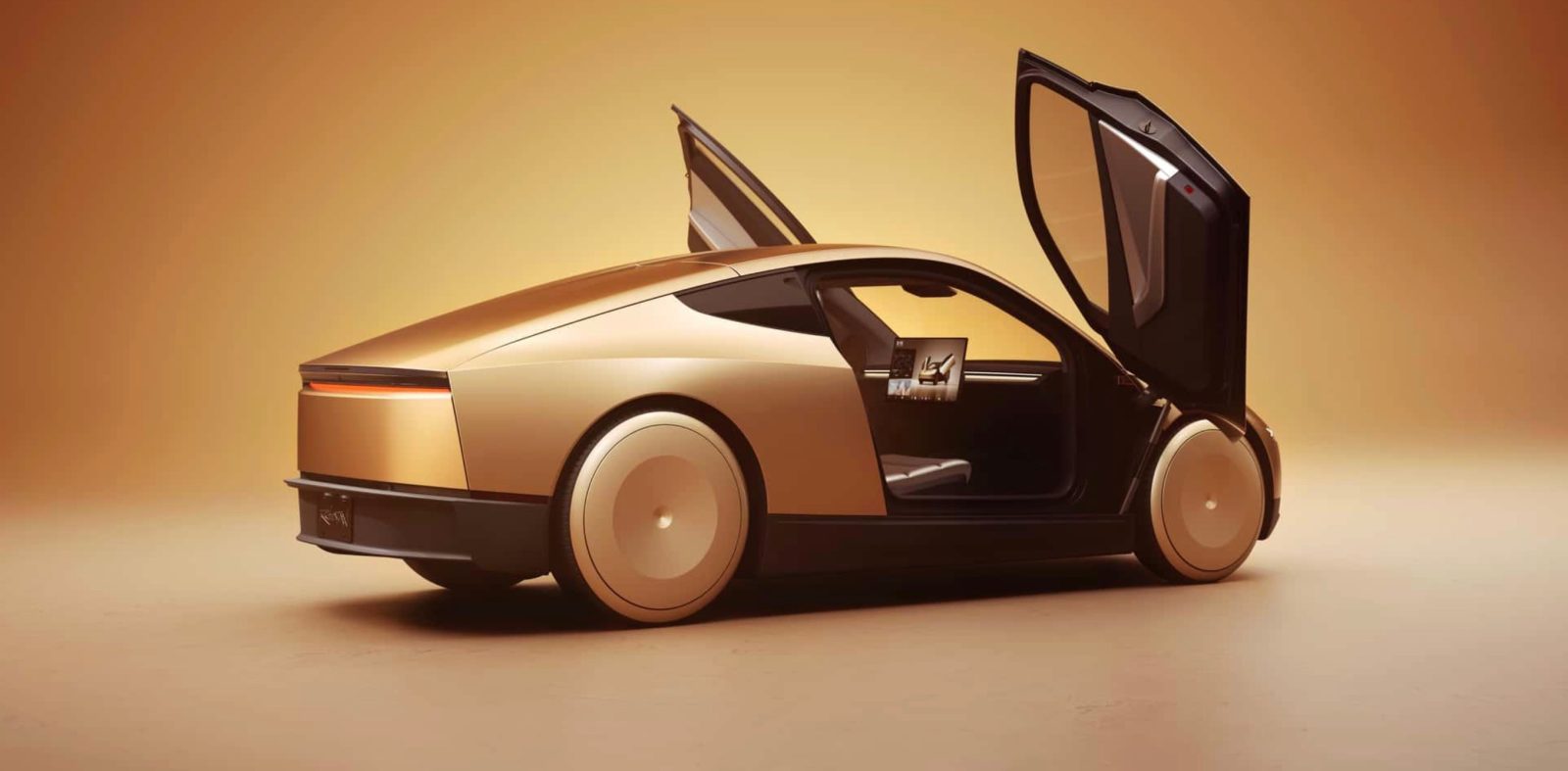
Victor Nechita, who served as Tesla’s vehicle program manager for the Cybercab, has announced he is leaving the company. The departure comes just days after the first Cybercab production unit rolled off the assembly line at Giga Texas, adding to an accelerating exodus of senior program managers at the automaker.
From Model 3 intern to Cybercab program lead
Nechita joined Tesla in 2017 as an intern on the Model 3 production line, right in the middle of what Elon Musk famously called “production hell.” Over nearly nine years, he climbed through the ranks from seating engineer to technical program manager for vehicle engineering, eventually landing the top program management role on the Cybercab.
In a LinkedIn post, Nechita described his journey “from interning on the Model 3 production line back in 2017 to becoming the Vehicle Program Manager of Tesla’s first purpose-built AV, the Cybercab.” He called the experience “humbling” and thanked his team, but did not name his next employer, only noting that he’s starting a new chapter in Boston.
Along the way, Nechita contributed to the Model 3 Highland refresh, which turned out to be a solid update to the vehicle. I drive one daily, and it’s a genuinely enjoyable car. That’s the kind of work that matters, incremental, tangible improvements to a product people actually use every day.
Another departure in the Tesla exodus
Nechita was one of the few that survived a complete refresh of Tesla’s vehicle program team in 2024-2025.
His exit continues a pattern that has been accelerating since late 2025. In November, Tesla lost both its Cybertruck program manager Siddhant Awasthi and Model Y program manager Emmanuel Lamacchia on the same day. Both had started as interns and risen through the ranks, a trajectory nearly identical to Nechita’s.
The broader list of departures is staggering. Over the past two years, Tesla has lost Omead Afshar (VP of Sales and Manufacturing for North America and Europe), Milan Kovac (head of the Optimus program), Drew Baglino (18-year veteran who led powertrain), Pete Bannon (VP of Hardware Engineering), and another manufacturing director as recently as January 2026.
The result is that Tesla currently has no original program manager remaining for any of its production vehicles, Model 3, Model Y, Cybertruck, or now, the Cybercab.
The Cybercab problem remains the same
Nechita did his job. He brought the Cybercab from concept through development to the first production unit rolling off the line. There’s still a long road of validation before continuous production begins, Musk himself has said early production will be “agonizingly slow”, but getting to the first unit is a real milestone.
The problem is that the Cybercab is a vehicle that makes no sense without unsupervised autonomy, and Tesla clearly hasn’t solved that in any meaningful way.
The Cybercab has no steering wheel, no pedals, and no fallback. If the self-driving software doesn’t work, the vehicle literally cannot be driven. Tesla changed the meaning of “Full Self-Driving” in September 2025, dropping its promise of unsupervised autonomy altogether. The next-gen AI5 chip won’t be available until mid-2027, meaning the Cybercab will launch on AI4 hardware, the same hardware that hasn’t achieved unsupervised autonomy in millions of existing Tesla vehicles.
When Tesla claimed to launch “unsupervised” Robotaxi rides in January, they vanished within a week and to this day, the program is limited to a small section of the Robotaxi service area in Austin with heavy use of teleoperation.
Electrek’s Take
Top comment by Andrea
The problem is that the Cybercab is a vehicle that makes no sense without unsupervised autonomy
Actually, the Cybercab is a vehicle that makes no sense with or without autonomy.
Limited to carrying only two people, difficult to access for the elderly and disabled,
it's the opposite of what a public transport vehicle should be.
Nechita seems like a talented engineer who worked his way up from a Model 3 production line intern to leading one of Tesla’s highest-profile programs. You have to respect that trajectory, and the fact that he brought the program to the first production unit is a genuine accomplishment. His work on the Model 3 Highland was solid, I know because I drive one every day, and it’s a great car.
But the Cybercab itself remains a vehicle in search of a reason to exist. Without unsupervised full self-driving, which Tesla hasn’t solved and shows no meaningful evidence of being close to solving, the Cybercab is a two-seater with no steering wheel that can’t move. Tesla has been promising autonomous driving is right around the corner since 2016. Every single timeline has been wrong.
Losing the program manager who bridged concept and production, right as the vehicle transitions to volume manufacturing, is the kind of institutional knowledge loss that compounds. Tesla will promote internally and push forward, that’s what they always do, but the real question isn’t whether they can build the Cybercab.
It’s whether there’s any point in building it at scale until someone is actually sitting in one without a safety monitor.


FTC: We use income earning auto affiliate links. More.




Comments