
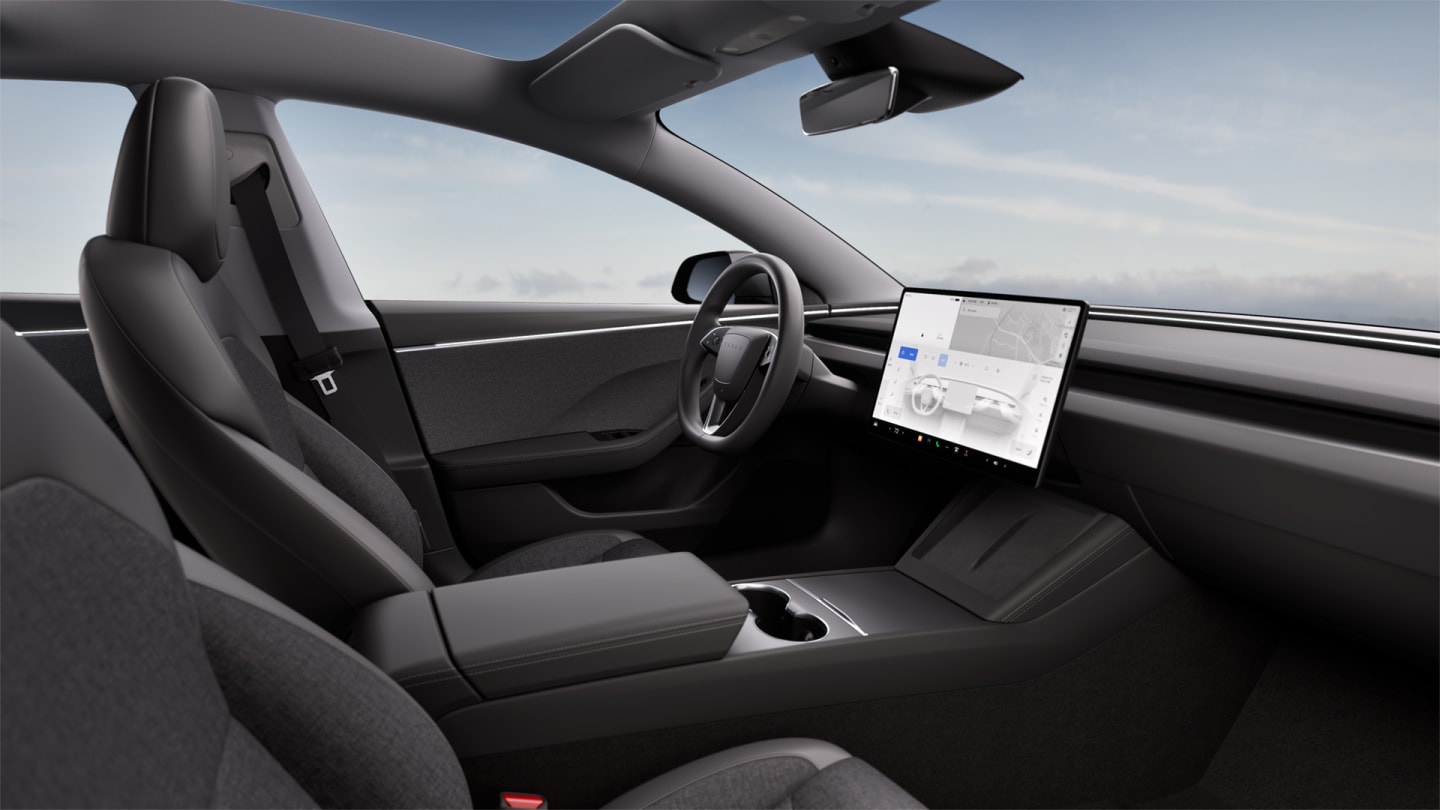
Tencent Cloud announced today that it has partnered with Tesla to integrate WeChat-linked features directly into Tesla vehicles in China. The over-the-air update will roll out to over 1 million Model 3 and Model Y vehicles built at Giga Shanghai, delivering one-tap location sharing from WeChat and AI-powered service suggestions — a significant concession by Tesla to China’s dominant digital ecosystem.
The move marks a deepening of the relationship between the two companies. Tencent first took a 5% stake in Tesla back in 2017, worth over $2.2 billion at the time. But this partnership goes far beyond a passive investment, it represents Tesla finally embracing the kind of deep local software integration that Chinese EV makers like BYD, NIO, and Xpeng have offered for years.
What the WeChat integration actually does
The partnership launches with two core features: “WeChat Connectivity” and “Destination Services.”
The first allows Tesla drivers to tap a location in a WeChat conversation and send it directly to their vehicle’s navigation system. The destination appears on Tesla’s central display without any manual re-entry, eliminating a friction point that Chinese drivers have long dealt with in Tesla’s relatively closed software ecosystem.
The second feature leverages Tencent’s AI to offer context-aware suggestions based on the driver’s destination. Think nearby restaurants, parking availability and pricing, or charging station locations, all served through WeChat’s Mini Programme ecosystem without requiring separate app downloads. Payments can be completed via WeChat Pay directly from the dashboard.
Tencent Cloud confirmed it is already exploring additional features, including voice-to-text routing from WeChat conversations.
Tesla’s ‘best of breed’ approach in China
Tesla has quietly built an extensive network of Chinese tech partnerships that stands in stark contrast to the walled-garden approach it deploys in Western markets. Baidu provides high-definition lane-level navigation. NetEase and QQ Music power entertainment, including karaoke modes. ByteDance and DeepSeek handle the “Hey Tesla” voice assistant with conversational AI, a necessity after Tesla integrated DeepSeek and Doubao AIs inside cars in China last year, since Grok cannot be used in the country due to regulations.
The Tencent partnership fits neatly into this strategy. Tencent’s “Intelligent Automobile Cloud” already supplies technology to nearly 40 automotive brands in China, including BMW. Its WeScenario platform, a lightweight app ecosystem built on WeChat Mini Programmes, has been available in vehicles from Li Auto, Audi, Mercedes-Benz, Geely, and others for years.
The problem is that Tesla is late to this party. Tencent launched WeChat for vehicles back in 2019, and according to CnEVPost, the service was already available across 15 automakers’ models by 2022, including Li Auto, Audi, and BMW. Tesla is only now catching up to a baseline that domestic competitors established years ago.
The competitive pressure is mounting
The timing of this partnership is not coincidental. Tesla is getting squeezed by competition in China and confirmed its first year of domestic sales decline in 2025. Wholesale deliveries from Giga Shanghai fell 7% year-over-year, an acceleration from the 3.2% decline between 2023 and 2024.
Meanwhile, BYD crushed Tesla in all-electric sales for 2025, securing the global BEV crown. BYD is now equipping its entire lineup with advanced driver-assistance systems, down to the ~$10,000 Seagull. Xpeng is rolling out autonomous driving software approaching Level 4. Xiaomi posted 175% sales growth in 2025.
These Chinese competitors don’t just build cars, they build software ecosystems that feel native to Chinese consumers. WeChat Pay, Mini Programmes, Alipay integration, and deep ties to local cloud services are table stakes. Tesla’s insistence on running its own software stack, while admirable from a consistency standpoint, left it at a tangible disadvantage in a market where the car is increasingly an extension of the smartphone.
Top comment by Ormond Otvos
Not a word about the total surveillance state in China, implemented by WeChat, and the exclusion of almost all information from the outside world. For instance, Electrek is not available in China. And this mealy-mouthed observation: "Grok cannot be used in the country due to regulations." What is Electrek afraid of?
Tesla’s broader software challenges in China compound the issue. The automaker launched AI training capability in the country just last week, but its “Full Self-Driving” ambitions remain stalled after China shut down Elon Musk’s claim that FSD would be approved imminently.
Electrek’s Take
This is the right move by Tesla, but it’s years overdue. WeChat is not just a messaging app in China, it’s the operating system of daily life, handling everything from payments to government services. Elon Musk knows that as he often referenced it as an example of what he’d like X to become.
While it might not sound like much for Westerners, the fact that Tesla drivers in China couldn’t seamlessly send a WeChat location to their car until now is, frankly, embarrassing for a company that prides itself on software.
Now that it is catching up to Chinese competitors on that front, it will be interesting to see whether it helps Tesla’s declining demand in China amid intense competition.


FTC: We use income earning auto affiliate links. More.


Comments