
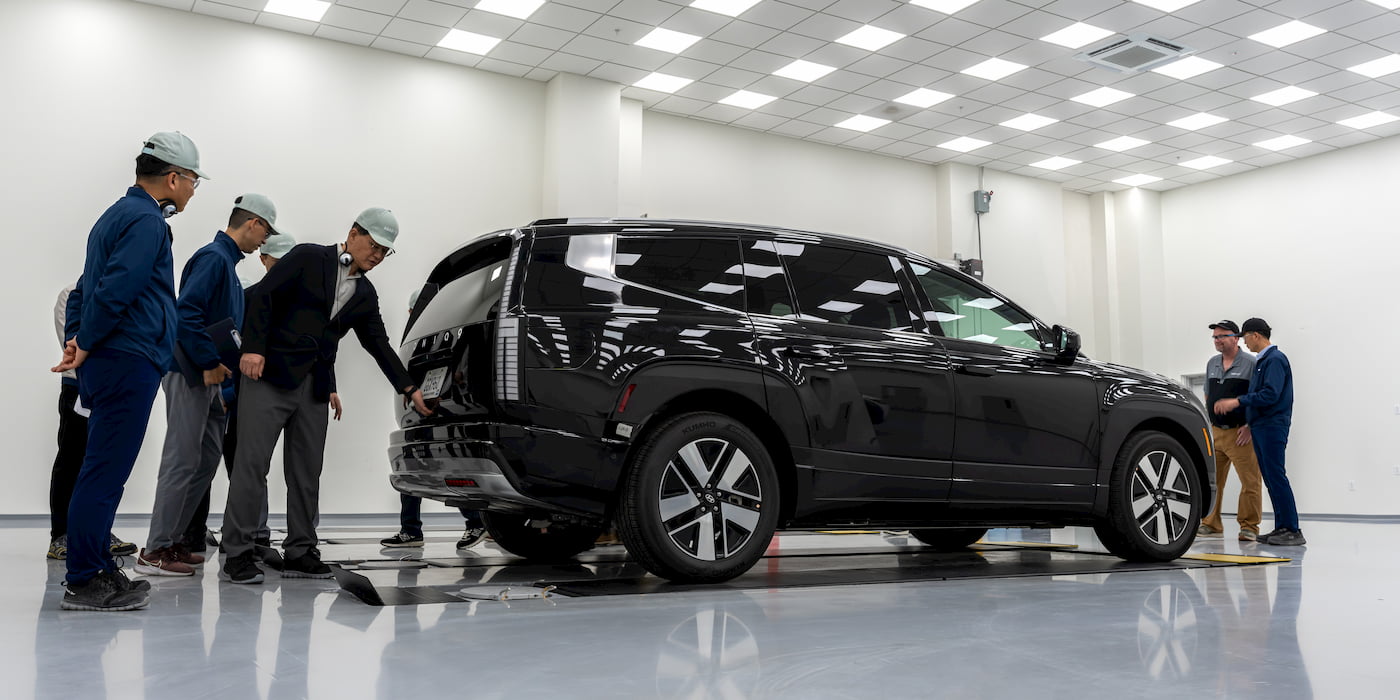
After notching its fifth straight record-breaking sales year in the US, Hyundai has no plans of slowing down. The company is ramping up local production while advancing new battery tech to boost EV sales.
5 for 5 in 2025
Hyundai went “5 for 5 in 2025” after posting its fifth consecutive record retail sales in the US. Total sales reached 901,686 vehicles, marking Hyundai’s third consecutive record annual sales year.
“Our diverse lineup, spanning advanced electrified vehicles and award-winning SUVs, continues to set the standard for innovation, efficiency, and value,” Hyundai Motor North America’s president and CEO, Randy Parker, said in a statement last month.
While many rivals, including Ford, Stellantis, and GM, have delayed or cancelled major electric vehicle initiatives, Hyundai is doubling down on EV innovation as it ramps up domestic output.
“We’re energized to build on this momentum and deliver even more exciting products and technologies for our customers in 2026,” Parker said.
Hyundai’s electrified vehicles, including EVs and hybrids, accounted for 30% of retail sales. The IONIQ 5 was the fifth best-selling EV in the US last year, behind the Tesla Model Y, Tesla Model 3, Chevy Equinox EV, and Ford Mustang Mach-e, with a record 47,039 units sold, up 6% from 2024.
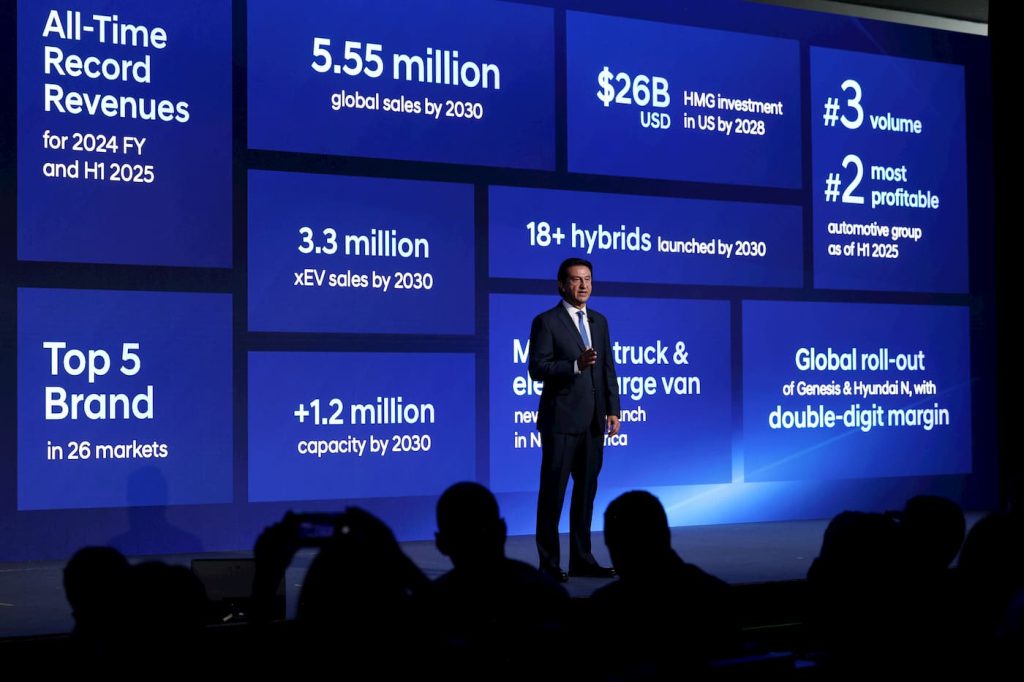
By 2030, Hyundai aims to double that, with electrified vehicle sales reaching 3.3 million units, accounting for 60% of total US sales.
Ramping up output
Hyundai currently builds all-electric vehicles, including the IONIQ 5 and IONIQ 9, at the Hyundai Motor Group Metaplant America (HMGMA). Later this year, Hyundai will begin producing its first hybrid vehicles at the facility, including a new Genesis model.
The company aims to produce more than 80% of vehicles it sells in the US domestically by the end of the decade, with supply chain content increasing to 80% from 60% currently.

The Metaplant will also play a key role in Hyundai’s plans to ramp up global output. By 2028, the facility is expected to reach a total production capacity of 500,000 EV and hybrid vehicles.
Hyundai aims to increase global annual production capacity by 1.2 million units by 2030, including 500,000 from the HMGMA facility.
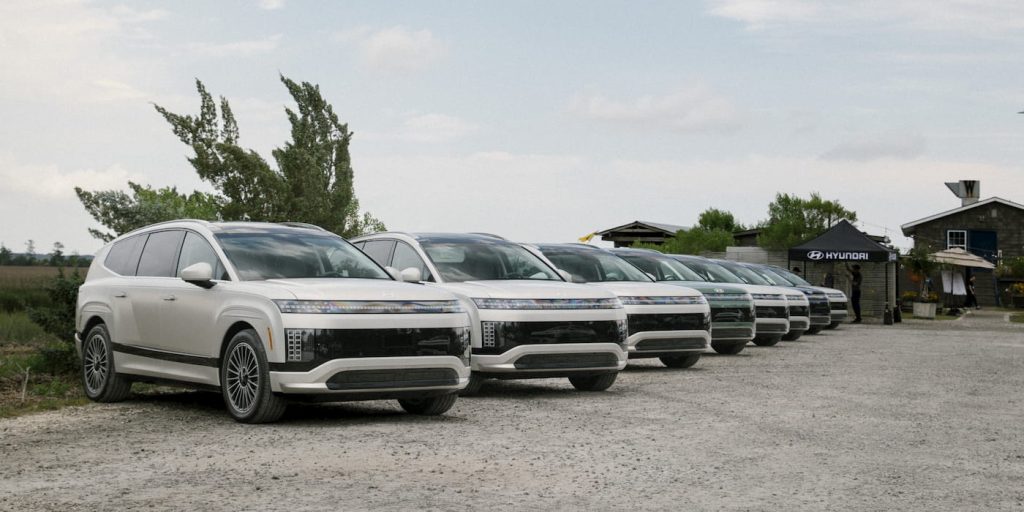
“This capacity supports the production of Hyundai, Genesis, and Kia EV and hybrid vehicles. Localized manufacturing enhances availability, affordability, and supply‑chain resilience, key enablers of our 2026 and long‑term sales ambitions,” according to Ira Gabriel, senior group manager for Hyundai Motor Company (via Savannah Morning News).
Hyundai eyes new EV battery tech to help drive sales
Gabriel explained that Hyundai is focused on new battery innovations and improving the charging experience as it ramps up output.
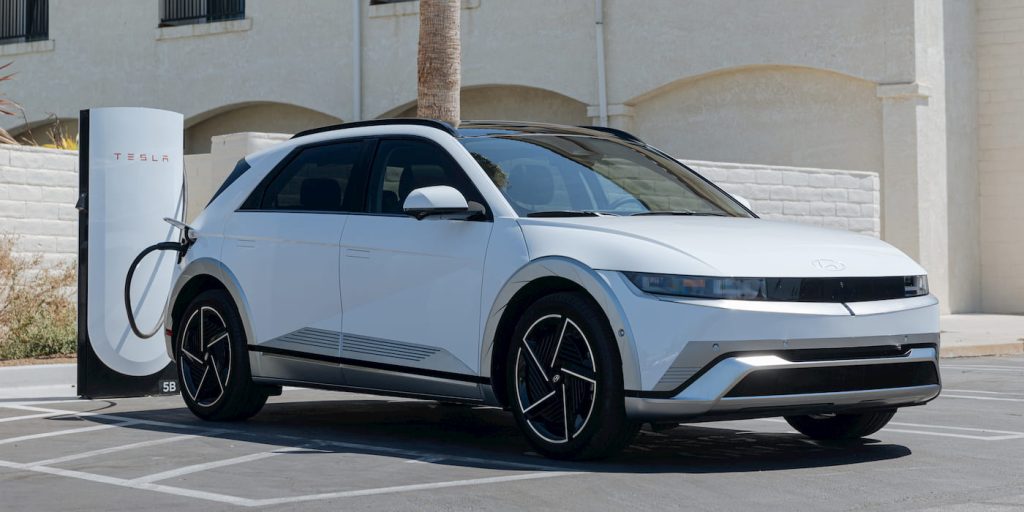
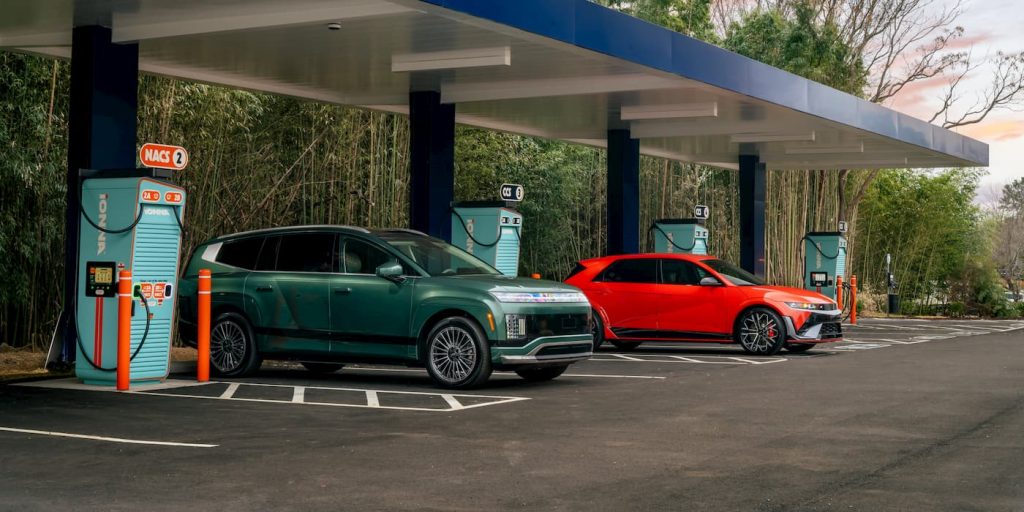
“To improve the charging ownership experience, all-new Hyundai EVs have access to the Tesla charging network with a native NACS port and through IONNA, our joint venture with seven other automakers, we’re building a high‑power public charging network targeting at least 30,000 chargers, complementing our Hyundai Home marketplace for residential charging and energy solutions.”
By 2027, Hyundai aims to deliver a few key improvements, including a 30 percent cost reduction, 15 percent higher energy density, and 15 percent shorter charging times.
“The company has analyzed durability data from over 50,000 IONIQ 5 vehicles, including units driven more than 250,000 miles (400,000 km), showing most vehicles retain more than 90 percent battery performance,” Hyundai said in a statement.
The company explained, “Advanced safety technologies include industry-leading Battery Management Systems (BMS) performing real-time predictive diagnostics during driving, charging, and rest periods.”
Starting this year, Hyundai said “cloud-based BMS will collect data from diverse vehicle environments, applying proprietary advanced modeling for faster, more precise diagnostics. Multiple exclusive safety layers include separation barriers, ultra-safety relays, refractory shields, and safety vents, preventing thermal runaway and safeguarding against fires.”
After posting its best January US sales in company history, Hyundai Motor is already off to a strong start in 2026.
Following the expiration of the $7,500 federal tax credit at the end of September, Hyundai has been stepping in with its own incentives. In February, it’s offering up to a $10,000 discount on all 2026 IONIQ 5 trims. The 2026 Hyundai IONIQ 5 is already among the most affordable EVs in the US, starting at $35,000.
Interested in testing one out for yourself? We can help you get started. Check out the links below to find Hyundai’s electric vehicles that are closest to you.


FTC: We use income earning auto affiliate links. More.


Comments