
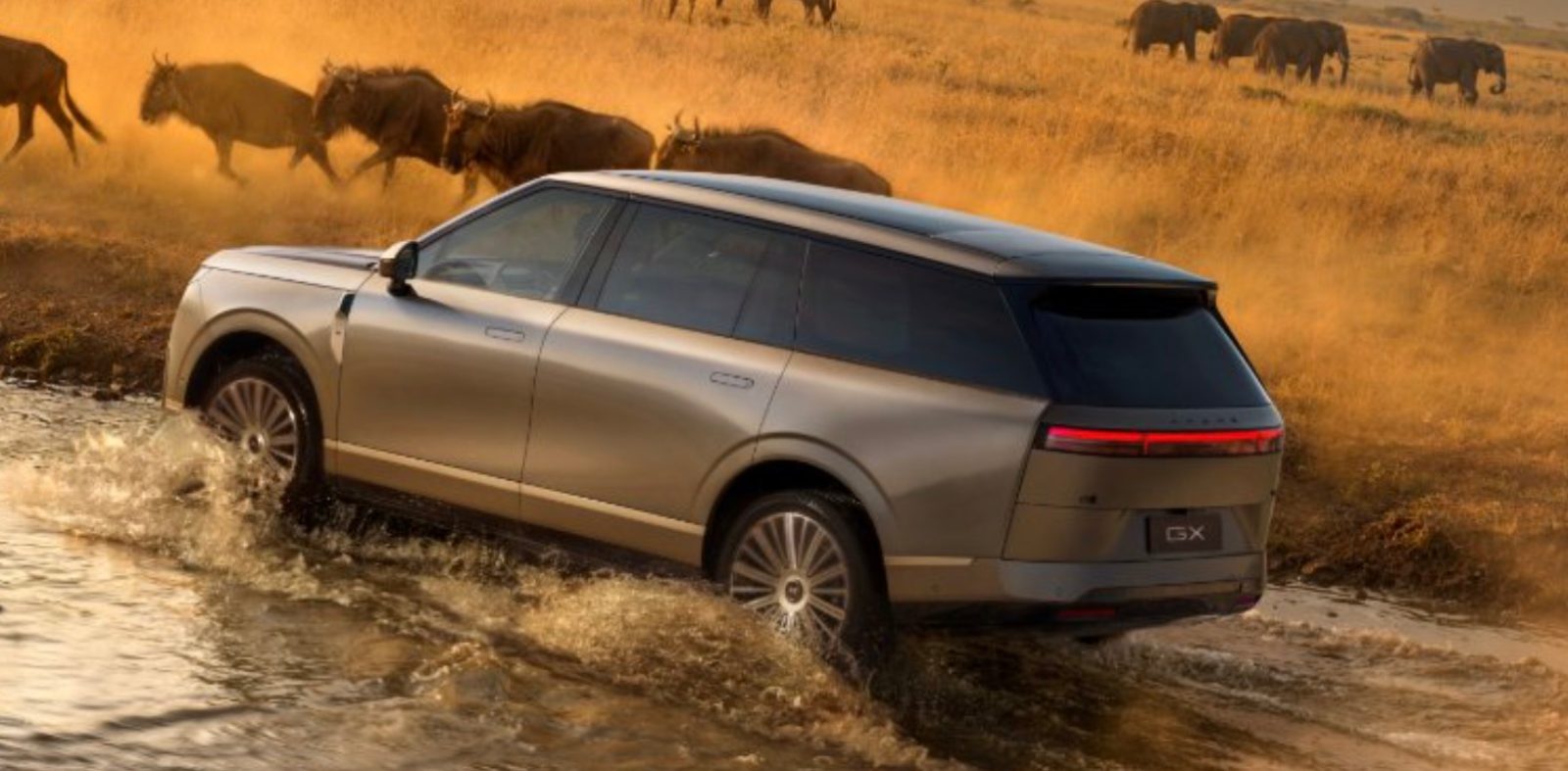
Xpeng has unveiled the first official images of the GX, its new flagship six-seat SUV that takes clear design inspiration from the Range Rover while packing the company’s most advanced technology yet.
The Chinese EV maker shared three images of the GX on Weibo today, revealing a sleek full-size SUV that will compete directly with premium rivals like the Li Auto L9, Huawei’s Aito M9, Zeekr 9X, and the upcoming Nio ES9.
Range Rover vibes, Chinese tech
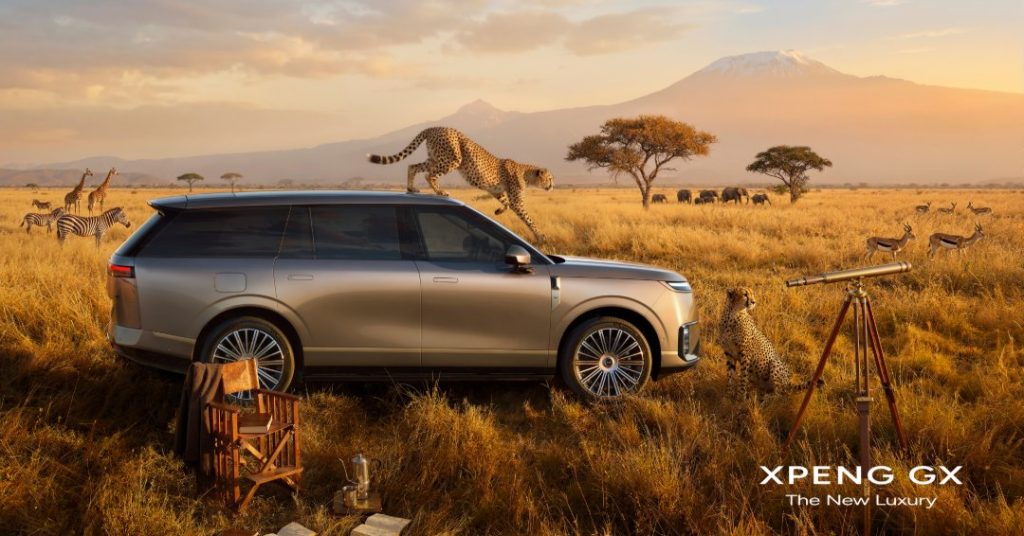
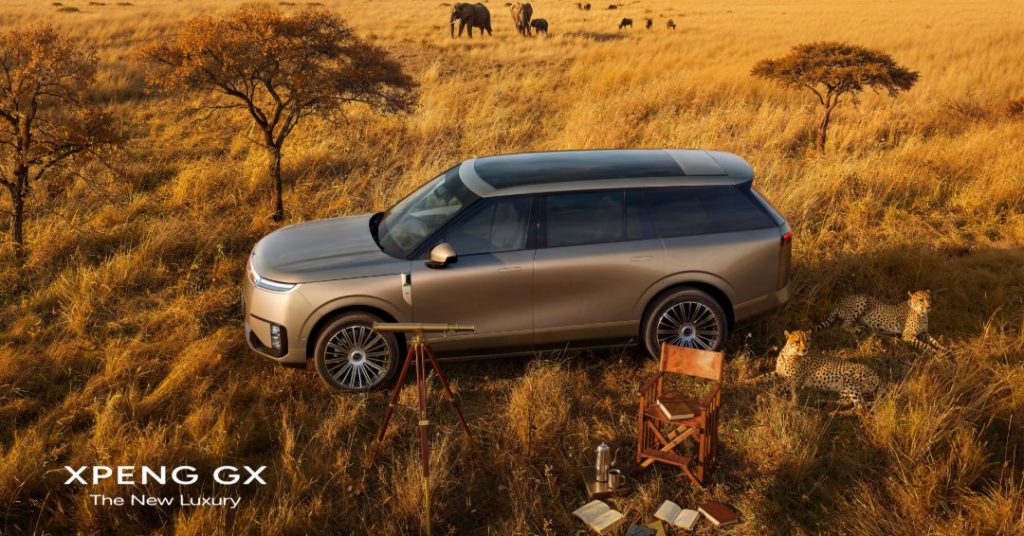
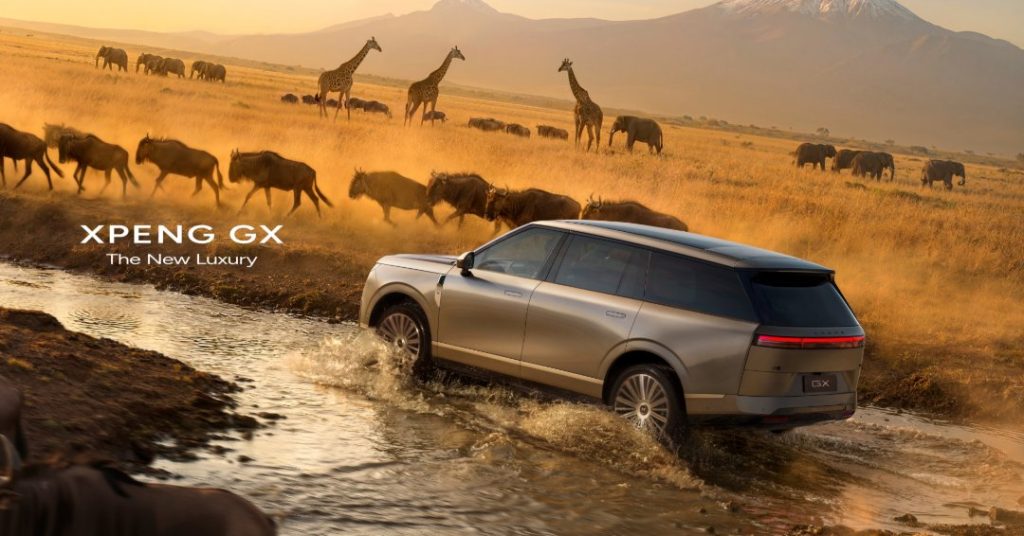
The GX’s exterior styling makes no attempt to hide its Range Rover inspiration. The profile features the same slanted A and B pillars that give Land Rover’s flagship its distinctive silhouette, along with a split two-piece tailgate design that’s become popular among Chinese luxury SUVs.
But where the Range Rover relies on traditional engineering, the GX leans heavily into Xpeng’s tech-forward approach. The SUV is built on the company’s new SEPA 3.0 “physical AI vehicle architecture” and features:
- Steer-by-wire (no mechanical connection between wheel and tires)
- Rear-wheel steering for improved maneuverability
- AI-powered chassis that adapts to driving conditions
- 5C battery charging technology (reportedly capable of adding significant range in minutes)
- Over 1,000 km mixed range in EREV configuration
- AR head-up display replacing traditional instrument cluster
- No roof-mounted LiDAR — Xpeng is betting on vision-based autonomous driving
Notably, the GX features retractable door handles, a design element China is banning starting January 2027 over safety concerns, so expect that to change for later production.
Solving the “impossible triangle”
Xpeng CEO He Xiaopeng explained the GX’s mission in a social media post, saying the company’s research found persistent issues with existing three-row SUVs: “having no room left for luggage” when all seats are occupied and vehicles that “feel bulky and difficult to drive.”
The GX aims to solve what Xpeng calls the “impossible triangle” of comfort, space, and handling, delivering all three in a package that works for both “daily city commuting and long family trips.”
The “X” in GX stands for “exploration,” representing both the pursuit of mobility innovation and Xpeng’s “X-tech DNA,” according to He.
Both BEV and EREV expected
While Xpeng hasn’t confirmed powertrain details, the GX is expected to offer both pure battery-electric (BEV) and extended-range electric (EREV) variants, following the company’s “dual-power strategy” seen in recent launches like the P7+ sedan, G7 SUV, and X9 MPV.
As I noted in my last trip to China last year, this is becoming an important trend in the world’s largest EV market.
The EREV version, using Xpeng’s new “Kunpeng Super Electric System,” is expected to deliver over 1,000 km of combined range — addressing one of the biggest remaining concerns for EV buyers in China.
Pricing and competition
The GX will be Xpeng’s most expensive model, positioned above the G9 (which starts at 248,800 yuan / $35,840). Expected pricing falls between 400,000-500,000 yuan ($57,600-$72,000).
That puts it squarely against:
- Li Auto L9 — China’s best-selling premium SUV
- Huawei Aito M9 — The tech giant’s flagship
- Zeekr 9X — Geely’s luxury three-row (30,000 delivered since September launch)
- Nio ES9 — Launching in April with 500,000+ yuan pricing
- Denza N9 — BYD’s premium entry
The full reveal is expected at the Beijing Auto Show in late April 2026, with China’s MIIT homologation filing likely to expose detailed specifications soon.
Electrek’s Take
Top comment by Damon Ekstrom
Steer by wire is a great example of how technology continues to make EVs better. I'm no fan of the Cybertruck, but steer by wire is awesome. It's being utilized by many other car makers too, like Honda for their zero line.
Xpeng is making a bold move here. The premium three-row SUV segment in China is brutally competitive, with every major EV maker fighting for affluent family buyers.
What sets the GX apart isn’t the Range Rover-inspired styling, that’s table stakes in China’s luxury market. It’s the technology stack: steer-by-wire, rear-wheel steering, and AI-powered chassis control in a family SUV is genuinely ambitious. These are features that even European luxury brands are only beginning to roll out.
The 1,000+ km EREV range also matters. While pure EV advocates such as myself have scoffed at plug-in hybrids, they’re wildly popular in China for good reason, they actually put more than decent all-electric ranges in them. They eliminate range anxiety entirely while still offering full electric capability for daily driving.
If Xpeng can deliver on the “impossible triangle” promise while keeping the price competitive with Li Auto, this could be a serious hit.


FTC: We use income earning auto affiliate links. More.



Comments