

Waymo began autonomous ride-hailing operations in Miami, Florida today, covering a 60-square-mile service area stretching from the design district to South Miami.
It’s the sixth city covered by Waymo’s level 4 driverless taxis, while its main competitor, Tesla, has just started its first driverless taxi operation today.
Miami is a famously chaotic city to drive in – in fact, it’s one of the slowest, most congested, and deadliest driving cities in the US.
So, where better to take an experimental driverless taxi than one of the worst places for humans to drive?
But Waymo has been offered in chaotic beach cities before – read about our ride-along on a chaotic Venice Beach weekend. (Having driven in both places myself, I can see some similarities between the two.)
And it’s not like San Francisco or Los Angeles proper are particularly simple places to drive, either, so the system has some experience with difficult locations.
And so, as of today, Waymo is starting to take rides in Miami – in a relatively-small 60-square-mile area surrounding downtown.
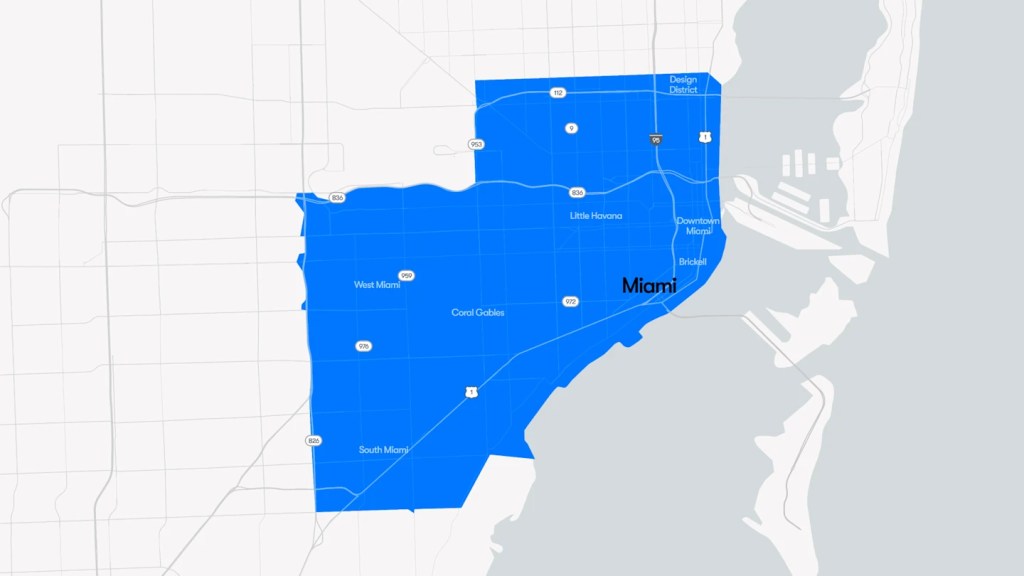
The area covers downtown, Little Havana and Coral Gables, heads up to the design district, and out to West and South Miami. It does not, however, cross the bridge to Miami Beach.
But it’s not open to everyone just yet. As the company has done with other new service areas, it’s inviting users from a waitlist first. Around 10,000 residents have already signed up on Waymo’s app, and invites will roll out to those users and to others who sign up.
Waymo now covers 6 total cities in the US: Los Angeles, Miami, Phoenix and San Francisco, along with Atlanta and Austin through a partnership with Uber. Each has a limited service area, those areas have been expanding over time. Right now, the service areas look like this:
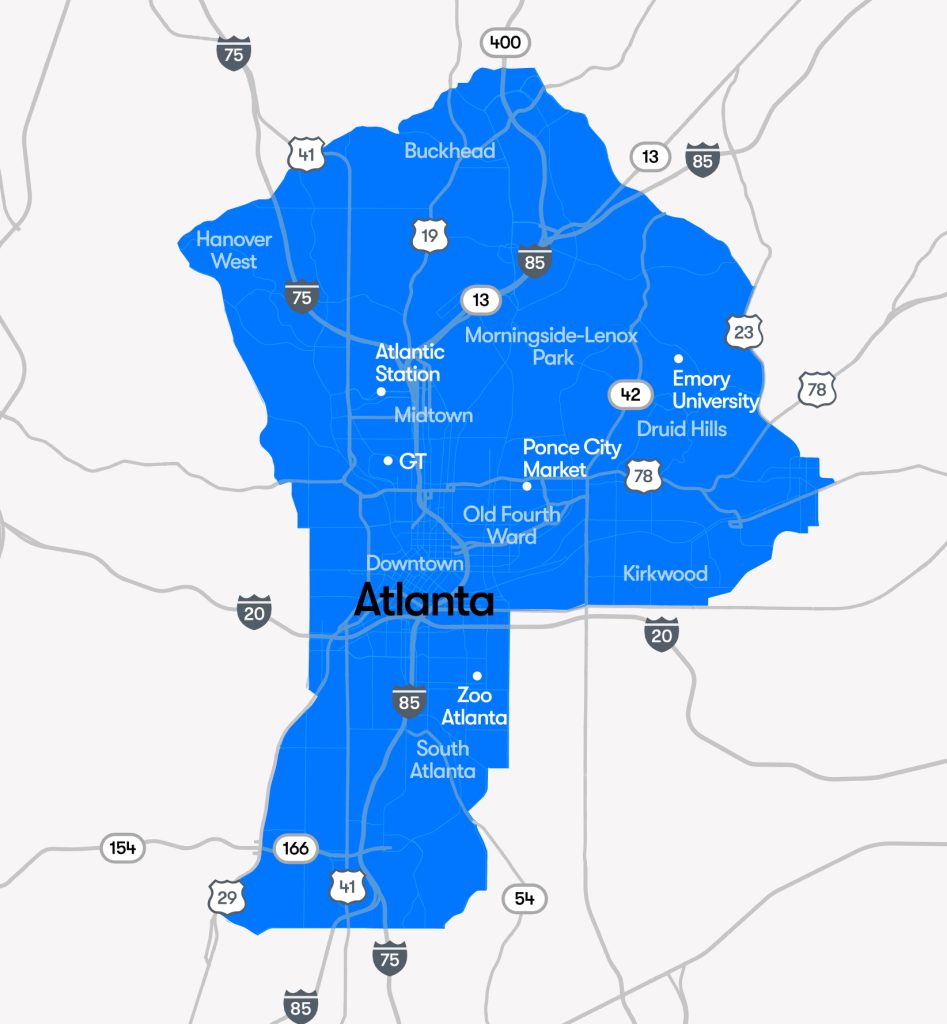
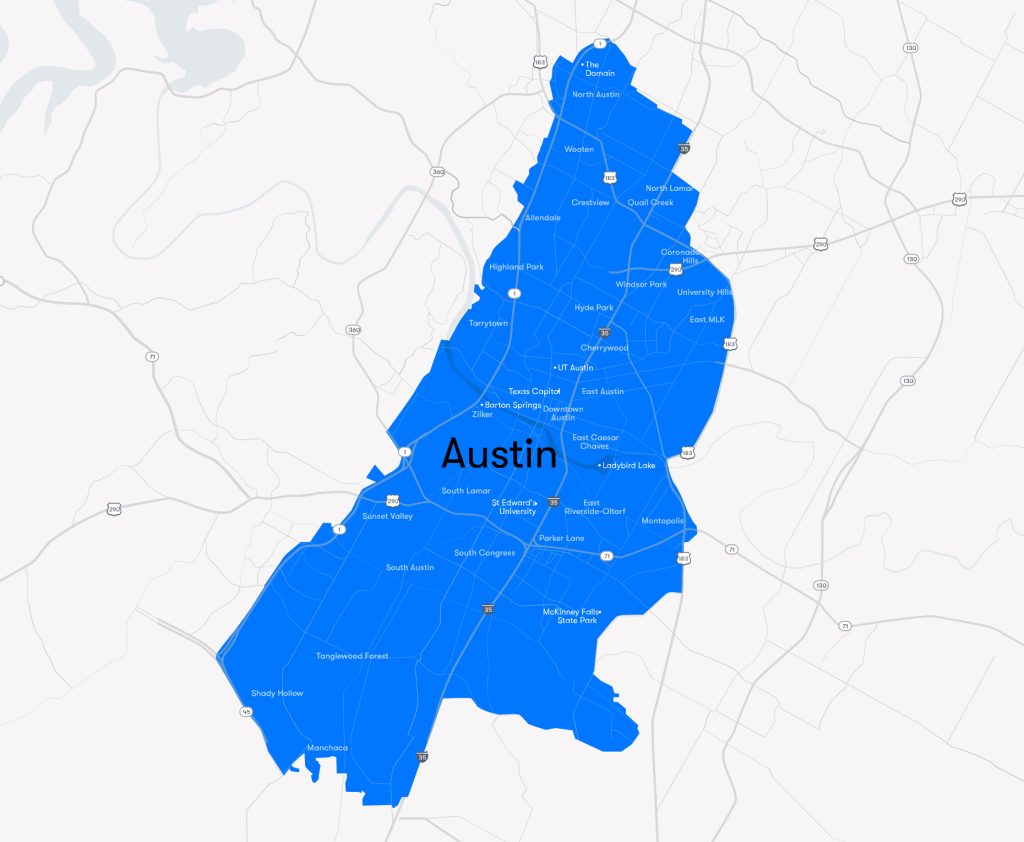
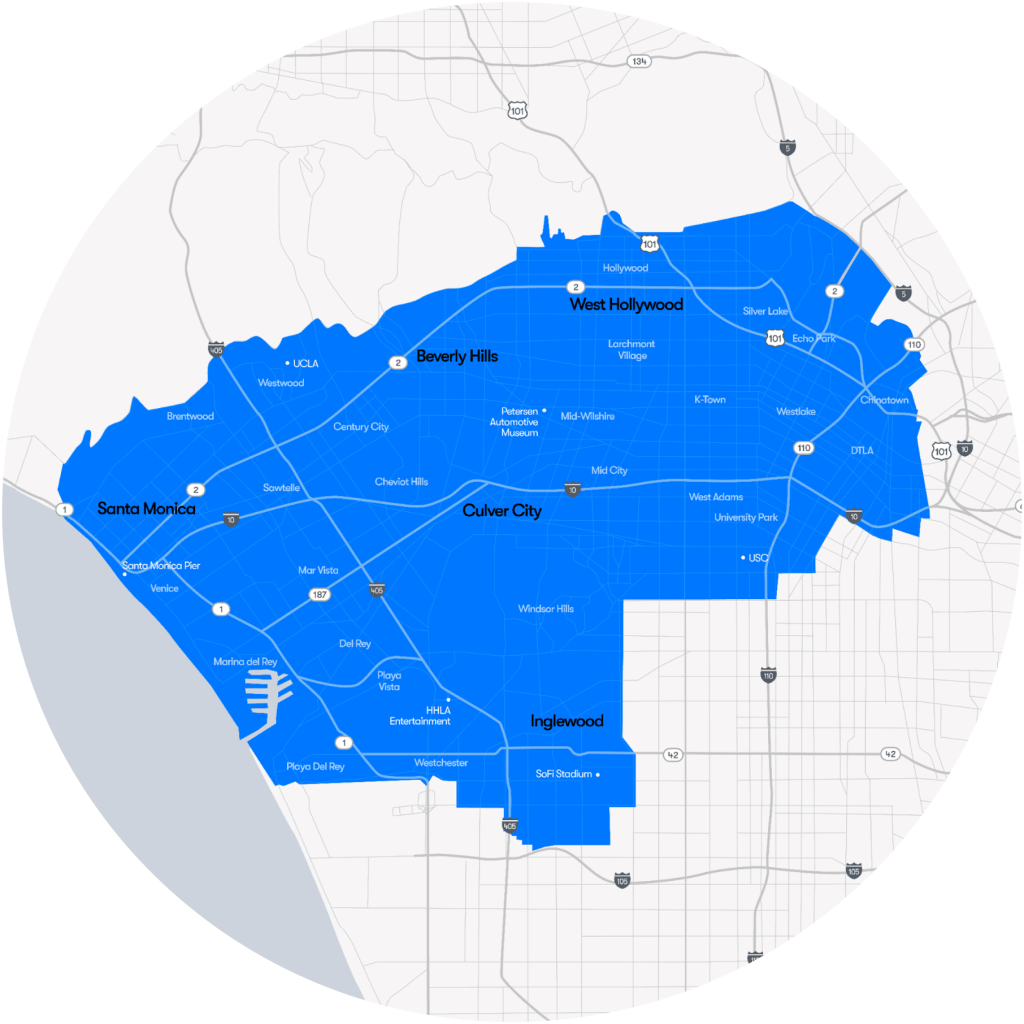
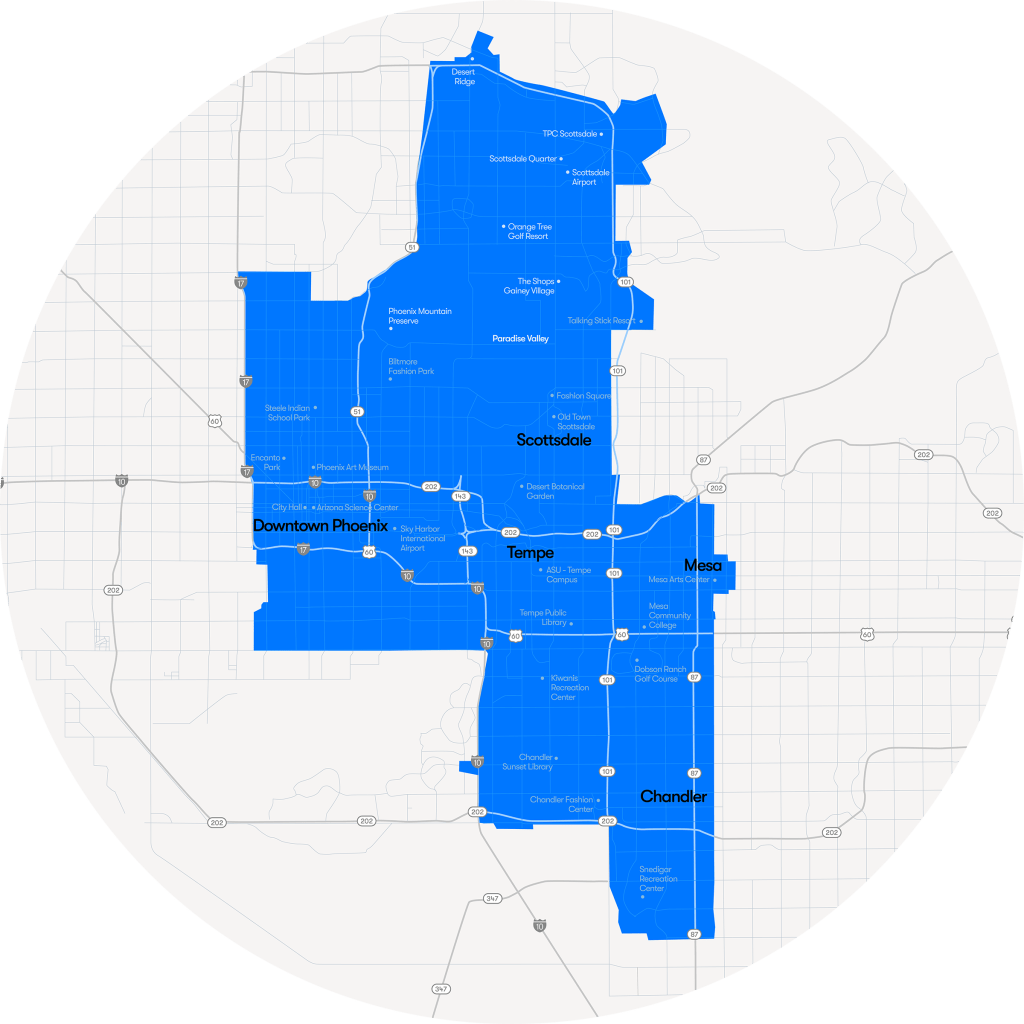
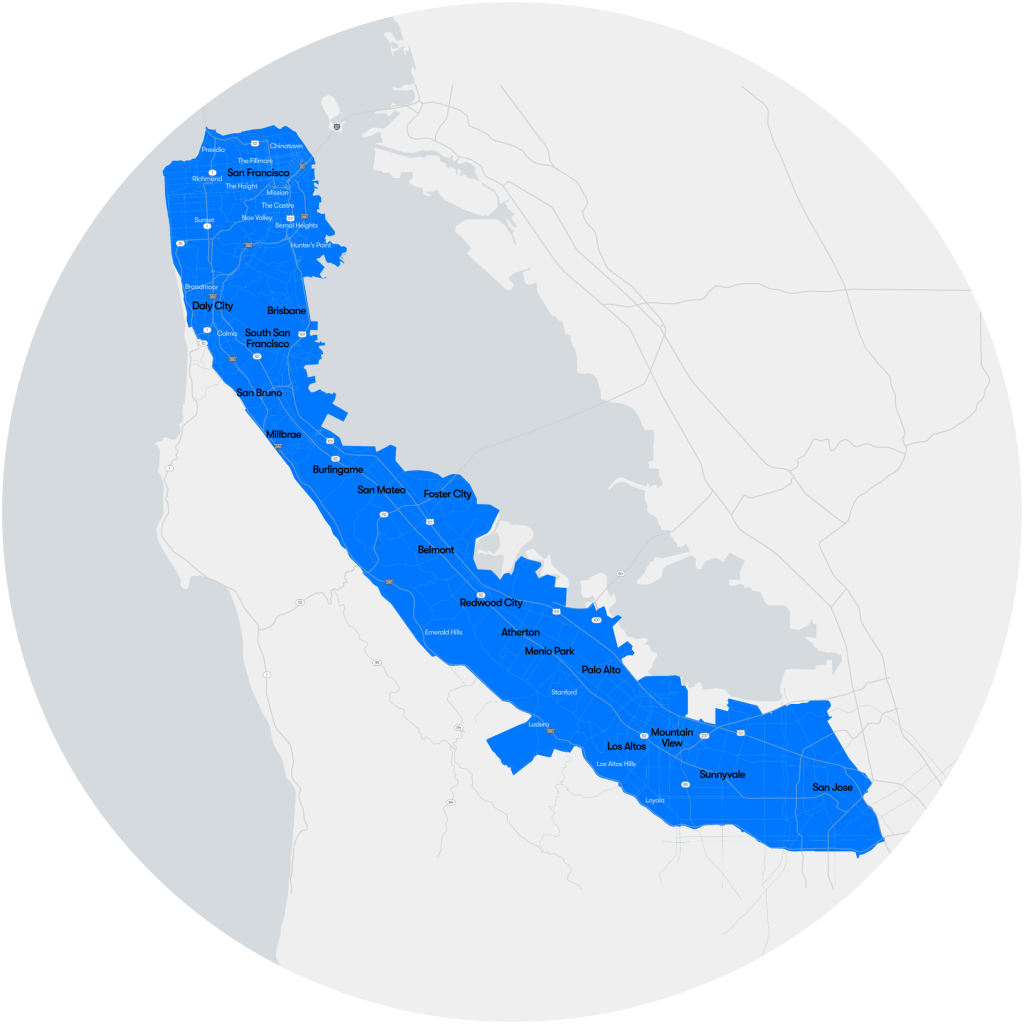
Today’s addition is the smallest of Waymo’s coverage areas for the time being, about on par with Atlanta at around 60 square miles. Its Phoenix and San Francisco service areas each cover hundreds of square miles, while Austin and LA are both a bit over a hundred currently.
But the company isn’t stopping there – it has 11 cities listed as “up next,” and 12 more that it’s currently collecting driving experience in. That includes two overseas locations, with London and Tokyo coming soon.
Waymo claims its driverless taxis result in a ten-fold reduction in serious injuries, and has released actual studies, submitted for peer review, based on internal data shared with the public.
How does this stack up to the competition? (Namely: Tesla)
Waymo’s primary competition at this time is Tesla. It used to be accompanied by Cruise, but after a human driver struck a pedestrian into the path of a Cruise vehicle and the Cruise vehicle dragged the pedestrian for some distance, and then Cruise withheld data from regulators, the company shut down its operations.
Tesla currently sells a system that it calls “Full Self-Driving” (FSD), which it has sold since 2016.
Notably, FSD is not an actual driverless system, unlike Waymo. Waymo is SAE “level 4,” which means it can operate with no driver in the vehicle in limited circumstances (in this case, geofenced areas). Tesla is still “level 2,” as it requires an attentive human operator who takes responsibility for the car at all times. (Inbetween is level 3, like Mercedes’ DRIVE PILOT system).
Tesla also shares some FSD data, and claims a 5-7x improvement in various types of collisions – an impressive, but lower number than Waymo’s claim.
But Tesla’s data is significantly less robust, and Tesla likes to take credit when FSD works, and blame external factors when it doesn’t.
There is third-party crowdsourced data available, but it’s quite limited as well. Nevertheless, it was enough for one insurance company to recently offer 50% off FSD-driven miles.
The two companies differ in their approach to self-driving sensors – Waymo uses LiDAR, whereas Tesla uses vision-only. Each has its advantages, though the cost advantage of cameras is rapidly dwindling, and most observers think LiDAR is the more robust solution.
Beyond the consumer-available FSD, Tesla has a competing ride-hailing service which it calls “Robotaxi” and operates in two cities.
Unlike Waymo, Tesla’s competing “Robotaxi” service has required an attentive human operator. It currently operates a small fleet of cars in two cities, Austin and San Francisco, and has made no dearth of mistakes.
In Austin, Tesla’s Robotaxis always had an attentive safety monitor in the passenger or driver seat, but that changed today, as Tesla just announced (during the writing of this article) that it will start offering drives with no safety monitor in the car.
This would mark the first level 4 service that Tesla has offered to date, even though its Robotaxis are significantly more crash-prone, even with safety monitors, than a human driver.
Meanwhile, in Tesla’s San Francisco Robotaxis, the operator is still in the driver’s seat – and often drives the car. Tesla said that most rides activate FSD at least some of the time, which means some of them don’t activate it at all. And Tesla can’t just decide to kick the drivers out – it hasn’t even applied for the permits required to do that in California yet.
And so, the Tesla-branded “Robotaxi” differs significantly from an actual robotaxi in that it was not actually a robot taxi – until mere minutes ago, when Tesla banished safety drivers from the car in Austin. Just as Full Self-Driving differs from actual full self-driving in that it doesn’t actually drive itself (…yet?).
Meanwhile, Tesla claimed that by the end of 2025, it would have robotaxi coverage for half the US population. As of today, in 2026, that number has just increased to the tens of thousands of people living in Tesla’s Austin service area. And long ago, Tesla claimed that owners would be able to earn money by sending their cars out as robotaxis, but that has not materialized, either.
But none of this has stopped Tesla’s bad CEO Elon Musk from declaring victory over Waymo, claiming that it “never had a chance” against the Tesla system which it continues to perform better than.
That said, Waymo has its own problems too. Right as its founder trashed Tesla’s approach this week, Waymo was criticized for not stopping for school buses.
Charge your electric vehicle at home using rooftop solar panels. Find a reliable and competitively priced solar installer near you on EnergySage, for free. They have pre-vetted installers competing for your business, ensuring high-quality solutions and 20-30% savings. It’s free, with no sales calls until you choose an installer. Compare personalized solar quotes online and receive guidance from unbiased Energy Advisers. Get started here. – ad*


FTC: We use income earning auto affiliate links. More.



Comments