
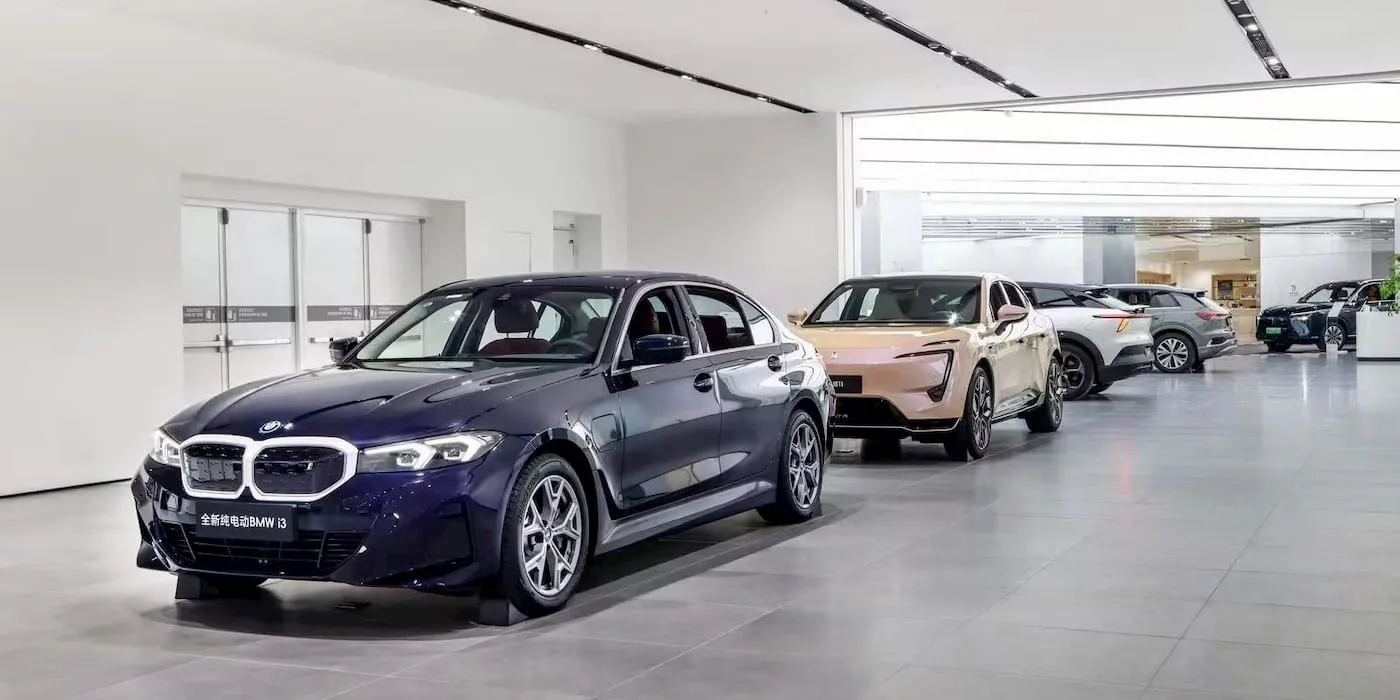
CATL is already dominating the global electric vehicle battery market, but now the company is saying sodium-ion batteries will be widely available by the end of 2026.
When is CATL launching sodium-ion EV batteries?
Through October, CATL accounted for 38.1% of the global EV battery market in 2025. That’s up slightly from the 37.6% market share it held in the first 10 months of 2024.
China’s BYD ranked second with 16.9% of the market, according to SNE Research, followed by LG Energy Solution (9.3%), CALB (4.7%), and Gotion ( 4.1%).
CATL looks to stay ahead after announcing plans to deploy sodium-ion batteries across multiple industries next year.
During a supplier conference on Sunday, December 28, 2025 (via CarNewsChina), CATL confirmed that the new battery tech will be ready for large-scale use by the end of 2026.
The EV battery giant said its sodium-ion batteries will be used for battery swapping, passenger vehicles, commercial vehicles, and energy storage.
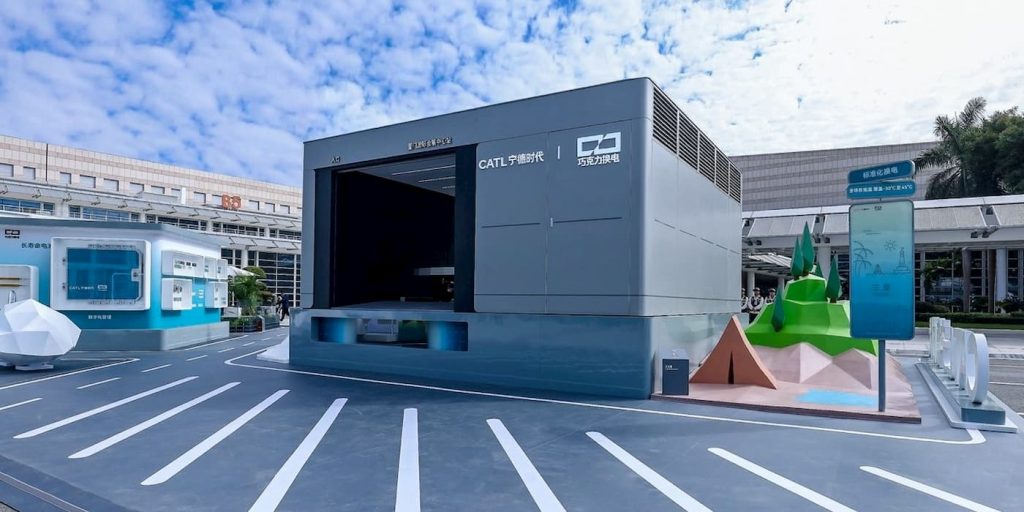
In April, CATL unveiled Naxtra, its new sodium-ion battery brand. CATL said its sodium-ion battery cells achieve an energy density of 175 kWh/kg, putting them on par with some of the best-performing LFP batteries.
Like LFP, sodium-ion batteries hold promise as a cheaper option to traditional lithium-ion batteries, but they are claimed to be safer and better performing in cold weather.
CATL previously said its sodium-ion batteries will be key to unlocking longer driving range and faster charging in cold weather. Its commercial sodium-ion batteries are designed to operate over a temperature range of -40℃ to 70℃.
In September, CATL said the new batteries offer a pure electric driving range of over 500 km (310 mi) and are ready for large-scale deployment.
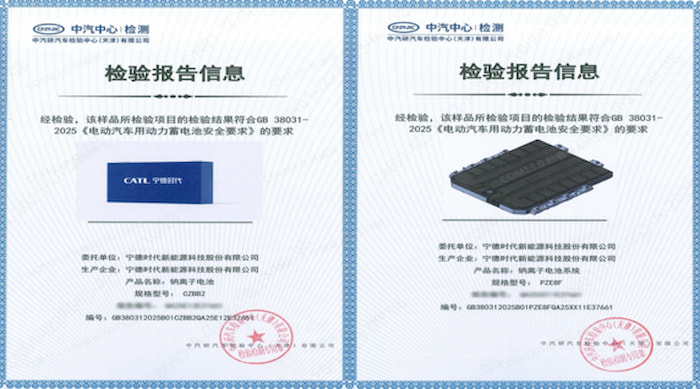
CATL’s Naxtra sodium-ion batteries were also the first to pass China’s new EV battery safety standards (GB 38031-2025 Electric Vehicles Traction Battery Safety Requirements), which will go into effect on July 1, 2026.
According to CATL, the new battery tech “efficiently reduces dependence on lithium resources and strengthens the foundation of new energy technologies, while promoting energy utilization from ‘single resource dependence’ to ‘energy freedom.'”


FTC: We use income earning auto affiliate links. More.


Comments