
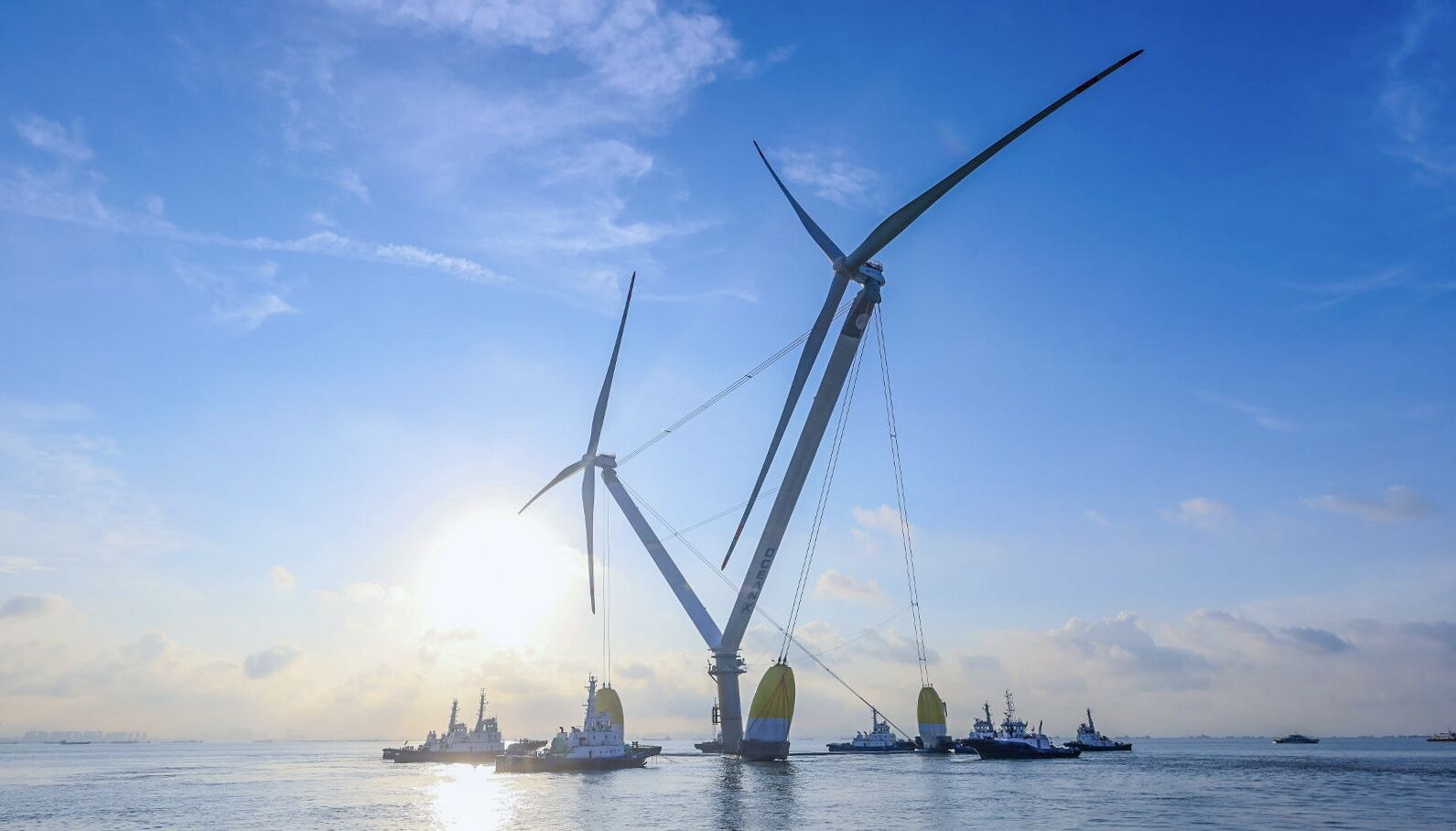
Global offshore wind targets are still strong enough to triple global capacity by 2030, despite the US’s offshore wind stagnation under Trump. A new analysis from energy think tank Ember and the Global Offshore Wind Alliance (GOWA) shows that the rest of the world is charging forward, underscoring confidence in offshore wind as a cornerstone of future clean energy systems.
The world’s offshore wind ambitions

According to the analysis, 27 countries, 27 subnational governments, and three regions now have offshore wind targets in place. Together, their 2030 national targets total 263 gigawatts (GW) of offshore wind – and that doesn’t even include China, which hasn’t set a national target yet.
Europe is still leading the charge, with 15 countries targeting 99 GW by 2030. Asia is quickly building momentum, too: India is targeting 30-37 GW, Japan aims for 41 GW in total (including 15 GW of floating offshore wind by 2040), and South Korea, Taiwan, and Vietnam together plan for 41 GW.
China’s ambitious Declaration 2.0
Last week, China unveiled a new plan to double its annual offshore wind buildout. Under the Beijing Declaration 2.0, signed on October 20, the country stated it will install no less than 15 GW of offshore wind annually during its 15th Five-Year Plan (2026-2030) – nearly double the 8 GW annual average during 2021-2025. Eleven coastal provinces have already set 2025 goals totaling 64 GW.
Long-term commitments are growing
Beyond 2030, 18 countries have announced longer-term offshore wind goals, showing their commitment to making offshore wind a permanent part of their energy mix. Seven countries also have targets for floating offshore wind – still an early-stage technology but one with huge potential.
The US slowdown
Meanwhile, the Trump administration is actively sabotaging the offshore wind industry in the US. While the administration has technically left the 30 GW by 2030 national goal in place, it has stalled permitting, rolled back incentives, and disrupted federal coordination with states and developers. Donald Trump repeatedly speaks out against offshore wind, and those political attacks have translated into real-world consequences: delayed projects, canceled contracts, and lost investor confidence.
Despite the federal sabotage, 11 states continue pushing forward with their own targets, collectively adding up to 84 GW. Governors in states like New York, New Jersey, and Massachusetts remain committed to offshore wind development, despite federal hostility. About 5.8 GW is expected to be built before 2029 from the five projects already under construction.
Why leadership matters
Government leadership has been critical to scaling offshore wind so far – and analysts say it will take even stronger commitments to keep that growth going.
“Offshore wind already delivers 83 GW of energy capacity across the world, enough to power 73 million homes,” said Dave Jones, chief analyst at Ember. “To countries thinking about agreeing new targets or extending existing targets, the message is clear: now is the time to act, to help spur the next wave of growth.”
Amisha Patel, head of secretariat at GOWA, added, “Despite recent challenges, the fundamentals of offshore wind energy remain strong. Achieving the Paris Agreement goals depends on large-scale offshore wind deployment. With Brazil joining GOWA at COP28 and assuming the COP30 Presidency, we urge the Presidency to turn ambition into implementation and to recognize offshore wind as a cornerstone of global climate action.”
Read more: China’s surge pushes global wind toward fastest growth ever

The 30% federal solar tax credit is ending this year. If you’ve ever considered going solar, now’s the time to act. To make sure you find a trusted, reliable solar installer near you that offers competitive pricing, check out EnergySage, a free service that makes it easy for you to go solar. It has hundreds of pre-vetted solar installers competing for your business, ensuring you get high-quality solutions and save 20-30% compared to going it alone. Plus, it’s free to use, and you won’t get sales calls until you select an installer and share your phone number with them.
Your personalized solar quotes are easy to compare online and you’ll get access to unbiased Energy Advisors to help you every step of the way. Get started here.


FTC: We use income earning auto affiliate links. More.


Comments