
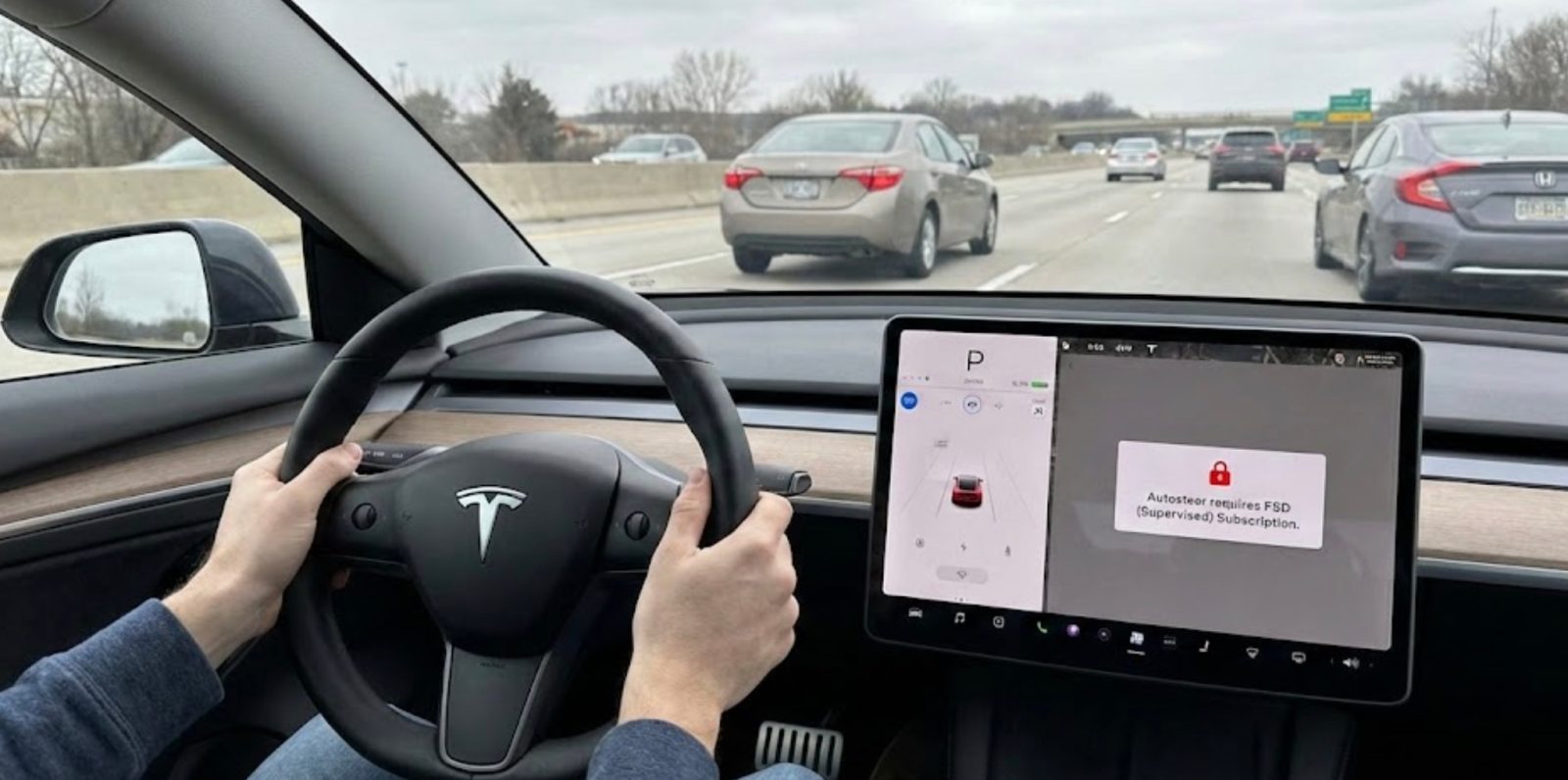
Tesla has settled a wrongful death lawsuit over a 2023 crash in which a Model S on Autopilot slammed into a parked fire truck, killing the driver and seriously injuring his brother.
The confidential settlement, filed in California federal court, lets Tesla avoid a jury trial that would have put Elon Musk’s own Autopilot claims in front of jurors.
A Model S on Autopilot at 70 mph
The crash happened on February 18, 2023, at around 4 a.m. on Interstate 680 in Contra Costa County, California. Genesis Giovanni Mendoza Martinez, 31, was driving his 2014 Tesla Model S with Autopilot engaged when the car plowed into a county ladder fire truck parked across lanes at an earlier accident scene.
The Model S was traveling roughly 70 mph. Mendoza was killed. His brother, Caleb Mendoza, was in the passenger seat and was seriously injured.
The case, Caleb Mendoza et al. v. Tesla, Inc. (No. 24-cv-08738-VC), was filed in the U.S. District Court for the Northern District of California before Judge Vince Chhabria. The plaintiffs were represented by Singleton Schreiber — the same firm behind a growing docket of fatal Autopilot cases against Tesla.
The claim Tesla didn’t want in front of a jury
The lawsuit didn’t rest only on a product defect theory. It alleged that Tesla and Musk misrepresented what Autopilot could actually do, leading Mendoza to over-trust a Level 2 driver-assistance system marketed with a name that implies far more.
In a May 2025 ruling, Judge Chhabria let that argument stand. He dismissed the plaintiffs’ concealment claim but allowed the fraudulent misrepresentation claims to proceed, finding the “Autopilot” name itself “plausibly misleading” — and ruling that Musk’s public statements, including that Autopilot was “probably better” than a human driver, were legally actionable.
That ruling set up a trial in which Musk’s years of autonomy promises would become evidence. Instead, Tesla settled. The terms were not disclosed.
Tesla keeps buying its way out of a verdict
The settlement fits a now-familiar pattern: Tesla resolves its fatal Autopilot and Full Self-Driving cases quietly, right before they reach a jury.
The one time it didn’t, it lost badly. A Florida federal jury hit Tesla with a historic $243 million verdict in a 2019 Autopilot death, and the judge refused to throw it out in February. Since then, Tesla has moved to settle case after case, including a fatal Full Self-Driving pedestrian crash in June.
The pressure is only building. Tesla is now facing up to $14.5 billion in Autopilot and FSD lawsuits, and the plaintiffs’ bar has been emboldened by the Florida win.
What makes these cases hard to litigate in the open is Tesla’s data. As we detailed in our investigation, Tesla hides the fatal Autopilot and FSD crashes buried in its federal safety reports — redacting crash narratives on 99.9% of its filings every year since 2019, while automakers like GM, Ford, and Toyota redact almost none.
Electrek’s Take
Every one of these confidential settlements is a data point, and the data points all say the same thing: Tesla does not want a jury weighing Musk’s autonomy claims against a dead driver.
Tesla might have convinced its shareholders that it solved autonomy, but that claim is simply not standing in court, and Tesla knows it.
Top comment by George Taylor
Secrecy.
How does it benefit society?
The Epstein stuff.
Why are we so afraid of being open?
Afraid of the truth?
If we all cared for each other … helped each other … the truth would benefit everybody. Help heal. Help prevent mistakes being repeated.
Competition can be beneficial.
It is not always beneficial.
Excessive competition is destructive, harmful.
Elon Musk is an extreme individual. Some aspects helpful.
Very helpful.
Other aspects dangerous.
Very dangerous …
The first 20 years - very good.
The last 5 years I could have done without.
I wonder how the next 20 years will work out.
I am not that hopeful.
Now … he frightens me.
He has a twisted mind.
Becoming ever more twisted.
The Mendoza case was especially dangerous because Judge Chhabria had already ruled that “Autopilot” is plausibly misleading and that Musk’s statements are fair game. That’s the crux of the entire liability theory — that Tesla built a Level 2 system, named it something that implies autonomy, and let its CEO narrate it as effectively self-driving for a decade. A trial would have forced that argument into the open with discovery, telemetry, and Musk’s own words. Settling makes it disappear.
The confidentiality is the point. Tesla pays to keep the number secret and the evidence sealed, so no single case becomes the precedent that opens the floodgates any wider than the $243 million Florida verdict already has. It’s a rational legal strategy, but it’s also an admission: when Tesla can’t get these cases dismissed, it doesn’t fight them in front of a jury — it pays to make them go away.
The question is how long that math holds as the lawsuit count climbs and the redacted crash reports keep piling up.
If you’re a Tesla owner, powering your EV with home solar is one of the smartest ways to lock in low fuel costs. With electricity rates climbing nearly 10% last year, home solar protects you against future rate increases. And with lease and PPA options, you can go solar with zero upfront cost and start saving immediately. If you want to find the best deal, check out EnergySage. It’s a free service with hundreds of pre-vetted installers competing for your business, so you save 20 to 30% compared to going it alone. No sales calls until you pick an installer. Get your free quotes here.


FTC: We use income earning auto affiliate links. More.


Comments