
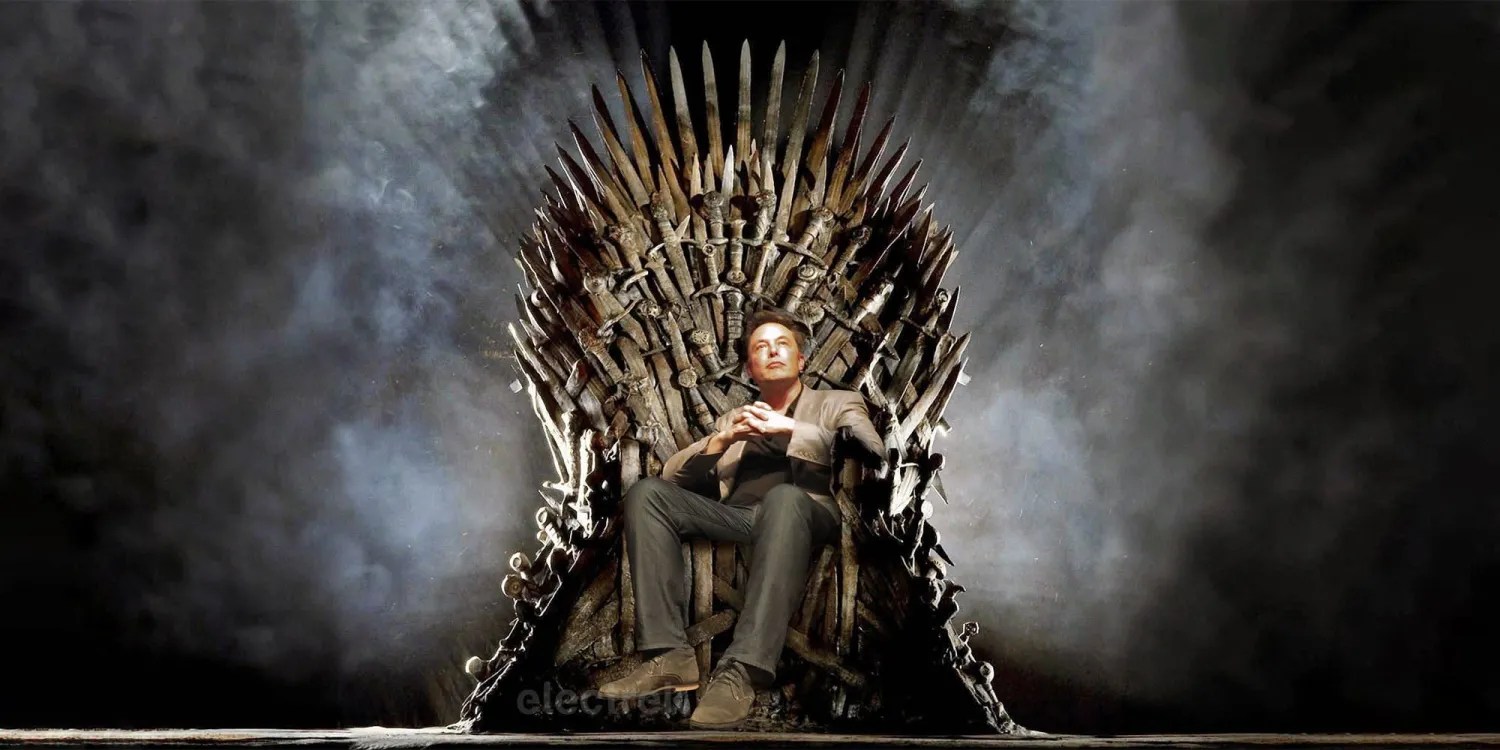
Elon Musk announced today that “Digital Optimus”, also called “Macrohard”, is a joint xAI-Tesla project that will use xAI’s Grok large language model to power a computer-controlling AI agent. The project is part of Tesla’s $2 billion investment agreement with xAI.
The announcement directly contradicts Musk’s own September 2024 statement that Tesla had “no need to license anything from xAI”, and it lands while Tesla shareholders are actively suing him for breach of fiduciary duty over the founding of xAI in the first place.
What Musk announced
In a post on X this morning, Musk described Digital Optimus as a system where xAI’s Grok serves as “the master conductor/navigator with deep understanding of the world” while a Tesla-built AI processes real-time screen video and keyboard/mouse actions from the past five seconds. Musk compared the architecture to Daniel Kahneman’s dual-process theory: Tesla’s component handles fast, instinctive reactions (System 1) while Grok handles higher-level reasoning (System 2).
Musk claimed the system would run on Tesla’s AI4 chip, which he priced at $650, paired with xAI’s Nvidia-based cloud hardware. He called it “the only real-time smart AI system” and said it could, in principle, “emulate the function of entire companies.”
He named the project “Macrohard”, a jab at Microsoft, and declared that “no other company can yet do this.”
The contradiction
Here’s the problem: Musk spent much of 2024 insisting that Tesla and xAI operated in completely separate domains and that Tesla had no use for xAI’s technology.
In September 2024, responding to a Wall Street Journal report that Tesla was in discussions to share revenue with xAI in exchange for using its AI models, Musk wrote on X: “There is no need to license anything from xAI.” He went on to explain that Tesla’s real-world AI system was “vastly larger” than any large language model and that xAI’s models were too large to run on Tesla’s vehicle inference computers.
That narrative served a specific purpose at the time. Tesla shareholders had just filed a lawsuit accusing Musk of breach of fiduciary duty for founding xAI, a private AI company that directly competes with Tesla’s own AI efforts. By claiming the two companies had no overlap, Musk was effectively arguing there was no conflict of interest.
Today’s announcement obliterates that defense. Musk is now explicitly describing a joint project where xAI’s Grok is the “brain” directing Tesla’s hardware. The two companies aren’t just overlapping, they’re building a product together.
It’s a fair question to ask: why couldn’t all this be built within Tesla?
The lawsuit context
The shareholder lawsuit, filed in June 2024 by the Cleveland Bakers and Teamsters Pension Fund in Delaware Chancery Court, alleges that Musk diverted Tesla’s AI talent, Nvidia GPU shipments, and strategic focus to xAI for his personal benefit. The plaintiffs want the court to force Musk to hand over his xAI stake to Tesla.
The case has only gotten stronger over time. In January 2026, xAI executives told investors their goal was to “develop self-sufficient AI to power robots like Tesla’s Optimus” — effectively confirming that the technology Musk built outside Tesla was always intended for Tesla’s flagship AI product.
Then, later in January, Tesla disclosed it had invested $2 billion in xAI’s Series E round, which valued the AI startup at $230 billion. Tesla shareholders are now funding the very company that the lawsuit argues Musk had no right to create outside of Tesla.
In February, SpaceX acquired xAI in an all-stock deal valuing the combined entity at roughly $1.25 trillion, with plans for an IPO later this year. Tesla’s $2 billion investment became an indirect stake in SpaceX-xAI — further entangling the companies while keeping the actual AI technology outside Tesla’s control.
The shifting narrative on Tesla and AI
The timeline tells a damning story. Musk pitched Tesla to investors as “the world’s leading real-world AI and robotics company.” He then founded xAI as a separate private venture, recruited Tesla AI engineers to staff it, redirected Nvidia chips that were ordered for Tesla to xAI’s data centers, and told everyone the two companies had completely different missions.
Now, with xAI burning through roughly $1 billion per month and needing to demonstrate value ahead of the SpaceX-xAI IPO, the narrative has conveniently shifted. Suddenly, xAI and Tesla are building products together, and Tesla’s $2 billion investment is framed as the vehicle for this collaboration.
Just last week, Musk claimed Tesla would “make AGI”, yet today’s announcement shows the actual AI reasoning layer lives at xAI, not Tesla. If Digital Optimus requires Grok to function, then Tesla is providing the hardware shell while Musk’s private company provides the intelligence. That’s not Tesla making AGI. That’s Tesla being a customer of xAI.
Electrek’s Take
Top comment by betterbruce
Elon kept saying he wouldn't build AI at Telsa unless he got 25% of the voting power.
So Tesla gave him a package worth 28% voting power and he still didn't build AI at Tesla.
This announcement is a gift to the shareholders suing Musk. For nearly two years, the central legal question has been whether Musk created a competing company that should have been built inside Tesla. Musk’s defense rested on the claim that xAI and Tesla serve fundamentally different purposes. Today, he personally destroyed that argument by announcing a joint product where xAI’s Grok is literally the brain directing Tesla’s AI hardware.
We also can’t ignore the pattern here. Musk told Tesla shareholders their company was an AI leader. He then built the actual AI outside Tesla, in a company he personally controls. He’s now forcing Tesla to pay $2 billion to access technology that arguably should have been developed in-house, using shareholder money to buy back what was taken from them.
The “Macrohard” name and the grandiose claims about emulating entire companies are classic Musk hype. But the legal implications are very real. Every time Musk publicly ties xAI and Tesla closer together, he makes the plaintiffs’ case stronger. If xAI’s technology is essential for Tesla’s Optimus ambitions, then Musk had a fiduciary duty to build it at Tesla, not at a private company where he captures the upside personally.
We’ll see if the Delaware court agrees, but Musk is not making his lawyers’ jobs any easier today.


FTC: We use income earning auto affiliate links. More.


Comments