
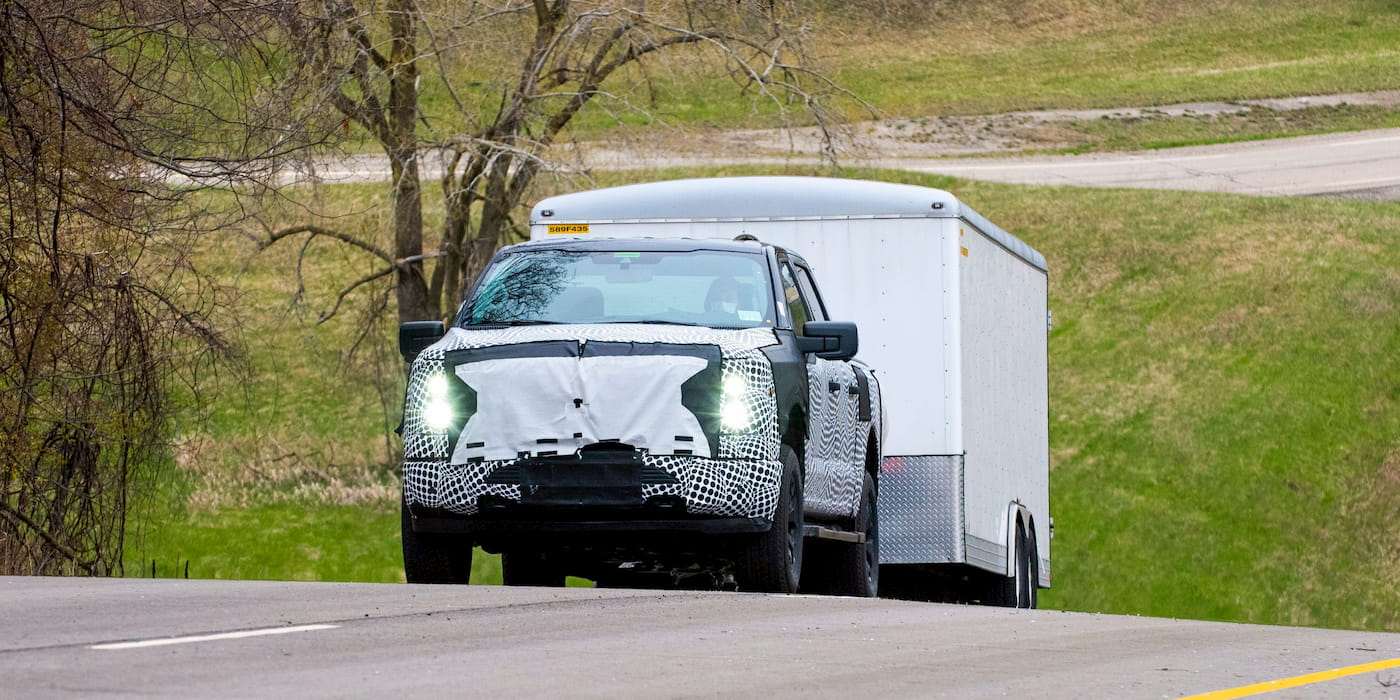
It’s official. The all-electric pickup is dead, but Ford is promising the F-150 Lightning EREV will be “every bit as revolutionary” as it shakes up EV plans once again.
Ford reveals next-gen F-150 Lightning EREV
Ford confirmed production of the current F-150 Lightning has ended as part of its updated Ford+ plan, which the company revealed on Monday.
The changes come as part of a broader shift from larger EVs, like the Lightning, to smaller, more affordable models.
While Ford still plans to launch lower-cost EVs based on its Universal EV Platform, the company is expanding its hybrid and extended range electric vehicle (EREV) lineup. By 2030, Ford expects 50% of its global volume to be hybrids, EREVs, and EVs, up from 17% in 2025.
As part of its new plans, Ford said the next-generation F-150 Lightning will switch to an EREV powertrain. It will be assembled at the Rouge EV Center in Dearborn, Michigan, replacing the current all-electric pickup.
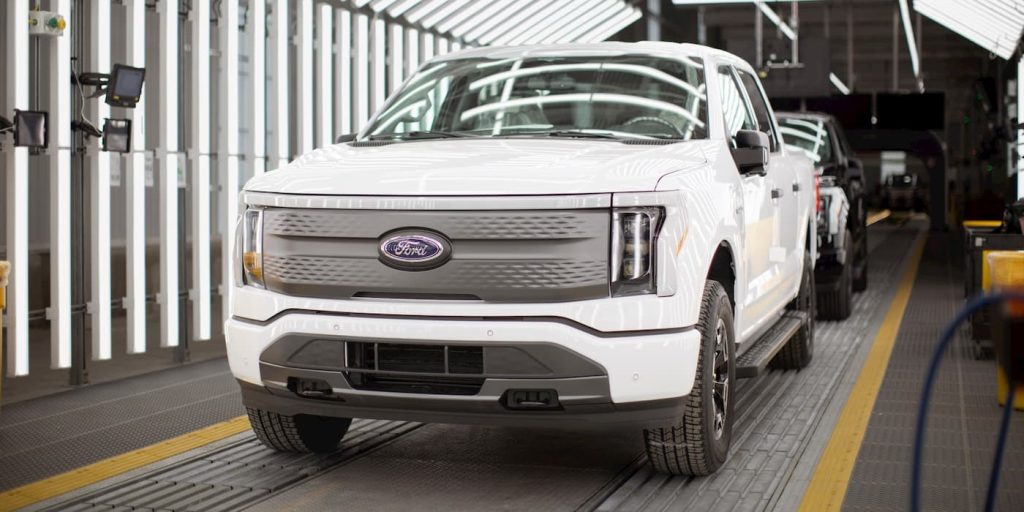
With production of the current-generation Lightning now concluded, Ford is sending workers from the Rouge EV Center to its Dearborn Truck Plant as it doubles down on gas and hybrids.
During its Q3 earnings call last month, Ford said the electric pickup would remain paused following a fire at Novelis’ plant in New York that disrupted aluminum supply.

The F-150 Lightning is a “groundbreaking” vehicle, according to Doug Field, Ford’s chief EV, digital, and design officer, that showed an electric pickup can be a great F-Series.
Field claims the “next-generation Lightning EREV is every bit as revolutionary.” It will still offer 100% electric power delivery, sub-5-second acceleration, an estimated combined range of 700+ miles, and it “tows like a locomotive.”
Ford also plans to replace its electric commercial van for North America with affordable gas- and hybrid-powered versions. It will be assembled at Ford’s Ohio Assembly Plant.
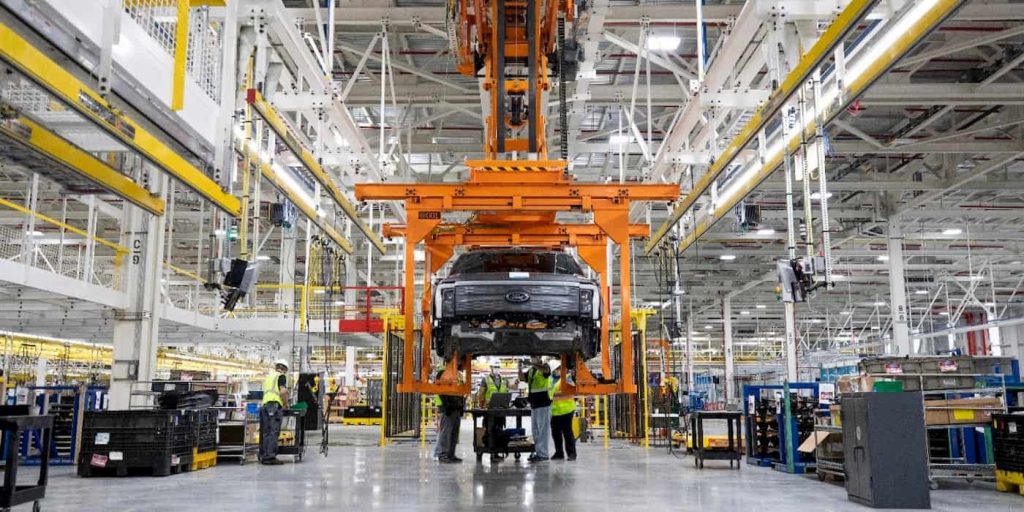
The move comes as part of Ford’s plans to launch five new affordable vehicles by the end of the decade, four of which will be assembled in the US. Ford also plans to offer gas, hybrid, and EREV options across nearly every vehicle in its lineup by then.
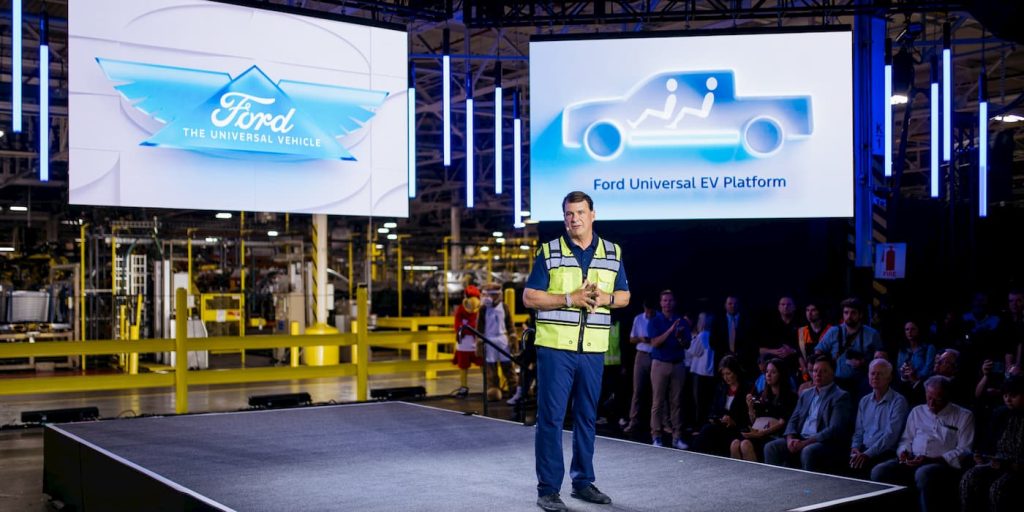
The first vehicle based on Ford’s new Universal EV Platform will be a midsize electric pickup, starting at around $30,000. It’s expected to be about the size of the Ranger or Maverick.
The news comes after SK On announced last week that it planned to end its joint venture with Ford to build EV batteries at three US gigafactories.
Ford is now planning to use the wholly owned EV battery plants in Kentucky and Michigan to launch a new battery energy storage business. The company plans to begin shipping BESS systems in 2027, with an annual capacity of 20 GWh.
“The operating reality has changed, and we are redeploying capital into higher-return growth opportunities: Ford Pro, our market-leading trucks and vans, hybrids, and high-margin opportunities like our new battery energy storage business,” CEO Jim Farley said on Monday.
Top comment by OliveMagnet
Ford didn’t “follow the customer” here so much as follow Washington’s mood swings. Killing the BEV Lightning while the rest of the world keeps scaling EV adoption isn’t a strategy - it’s self-sabotage. Ford is literally swapping a battery-electric pickup for an EREV with a gas generator. Translation: when we get nervous, we bolt an engine back on and call ourselves “pragmatic.”
Meanwhile, the technology curve isn’t slowing down, it’s accelerating, and the center of gravity is moving to China. They’re rolling out megawatt-class fast charging, pushing charge times toward “coffee break” territory, and shipping well-equipped EVs at prices that would’ve sounded like satire five years ago. That’s not a press release… it’s scale, cost-down engineering, and relentless iteration. The kind of flywheel you don’t catch up to by clinging to yesterday’s fuel.
Here’s the part nobody wants to say out loud: the US is defenestrating its own industrial future to protect a petro-economy that’s already being outcompeted on physics and economics. Oil is an incredible energy source, for the 20th century. Electrons are the 21st-century logistics layer: generation, storage, software, and motors. We’re choosing to stall out because politics told us to be scared of change.
The changes are designed to improve profitability and returns. Ford’s EV business, Model e, is now expected to reach profitability by 2029 with improvements in 2026.
Model e lost another $1.4 billion in Q3, bringing the total to $3.6 billion through September. Around $3 billion was due to its current EVs, while the other $600 million was spent on its next-gen models.
Although sales of the F-150 Lightning dropped 60.8% last month following the expiration of the $7,500 federal EV tax credit, Ford’s electric pickup remained the best-selling pickup in the US through September.
Read More: Ford CEO explains on CNBC why it’s canceling the F-150 Lightning and what will replace it.


FTC: We use income earning auto affiliate links. More.


Comments