

Kia’s first electric van is already becoming a global sensation. The PV7 is set to go on sale soon, serving as the bigger sibling to the PV5. Here’s our first look at it.
When is Kia launching the PV7 electric van?
After launching the PV5 last year, Kia’s electric van proved to be a bigger hit than most expected. In the first three months of 2026, it accounted for 9% of light commercial electric vehicle (eLCV) sales in Europe. In the UK, Kia now ranks third with a 17.4% share of the eLCV market.
The PV5 is a midsize, fully electric van, and the first from Kia’s Platform Beyond Vehicle (PBV) lineup. Kia’s PBVs are much more advanced than the vans, or most vehicles we are accustomed to.
Kia calls them “total mobility solutions” that use Hyundai Motor Group’s software-to-everything (SDx) and advanced batteries, powertrain, and other EV components.
Based on the flexible E-GMP.S platform, the PV5 comes in a variety of “top hats,” or custom configurations.
Kia offers Passenger, Cargo, Chassis Cab, Crew, Open Bed (like a pickup truck), WAV (Wheelchair Accessible Vehicle), and even three-row, seven-passenger configurations.
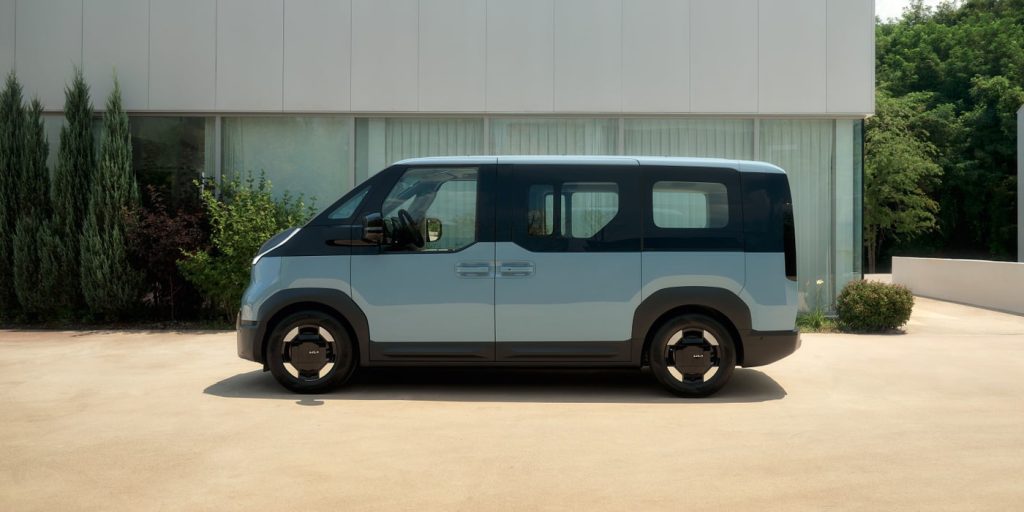
The PV5 spearheaded Kia’s entry into the global LCV market, but a larger sibling, the PV7, is due out in 2027 and could be an even “bigger” hit.
Ahead of its upcoming debut, the PV7 was spotted for the first time driving in public. You can see in the images from @MotorsJason (via Namcha Cafe) that the disguised prototype is clearly larger than the midsize PV5.


Kia said the PV7 boasts “the greatest interior space in the lineup,” but didn’t reveal an exact number. The PV7 Concept, revealed at the 2024 CES, measured 5,270 mm in length, 2,065 mm in width, and 2,120 mm in height, with a wheelbase of 3,390 mm.
In comparison, the PV5 Passenger model measures 4,695 mm in length, 2,895 mm in width, and 1,915 mm in height, with a wheelbase of 2,995 mm.


While it could change slightly in the production model, the PV7 will still be considerably larger than the PV7. It’s closer to the size of a standard (L2) Ford Transit.
The video (shown below) from HealerTV offers a closer look at the PV7 in real life, giving a clearer sense of the van’s size on a car carrier.
It appears to have a slightly different design with a charging port up front and what looks like another on the passenger side.
The PV7’s wheelbase is nearly the same length as the carrier it’s on, which the reporter previously pointed out “has been increased significantly compared to the PV5.” It also appears much wider, which should help free up interior space.
Despite the camouflage, you can also see that the rear bumper and taillights are distinct from those of the PV5.
Like the PV5, the larger electric van will offer a flexible, spacious interior, fit for passenger and business use. It will be equipped with Hyundai’s Pleos Fleet infotainment and software to help businesses improve efficiency and cut costs.
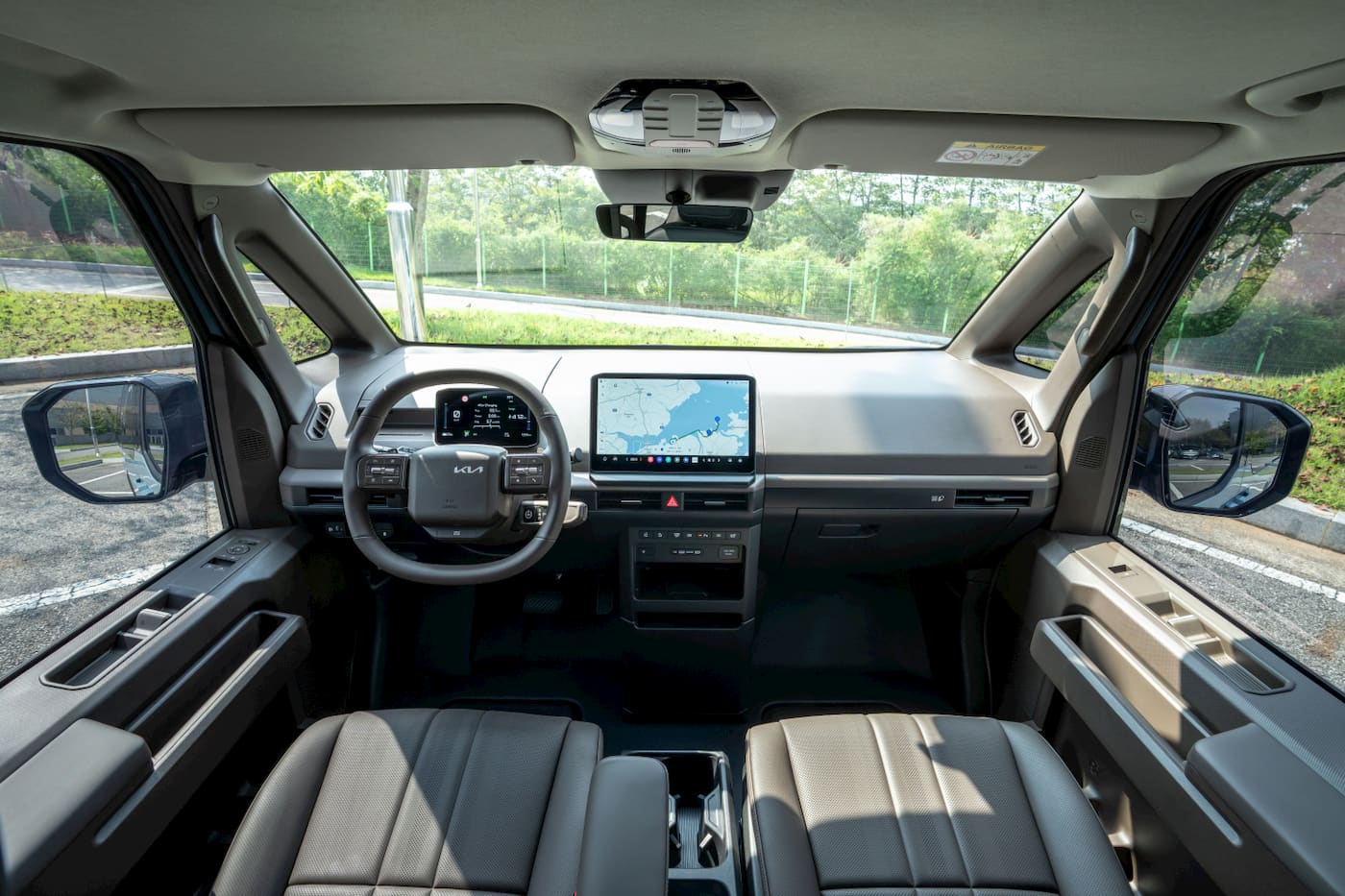
Kia said it will be available with various body types, seating options, and space configurations (it would make for the ultimate camper van).
In Europe, the PV5 Passenger is available with two battery packs: 51.5 kWh and 71.2 kWh. The former provides a WLTP range of 183 miles, while the latter is rated with up to 256 miles. The Cargo version uses the same battery packs, but offers WLTP ranges of 184 miles and 258 miles, respectively.
Top comment by stetrain
Hopefully this larger wheelbase also includes an option for a larger battery pack.
At the Busan International Mobility Show last month, Kia revealed three new PV5 models: the PV5 Prime, PV5 Passenger 2-2-3, and PV5 Cargo High Roof.
Following the PV7 next year, Kia will continue to introduce new PBV models, including an even larger PV9 in 2029.
With prototypes now out for testing, we should learn more about the PV7 very soon. Check back for the latest updates.
Source: MotorsJason, HealerTV


FTC: We use income earning auto affiliate links. More.


Comments