
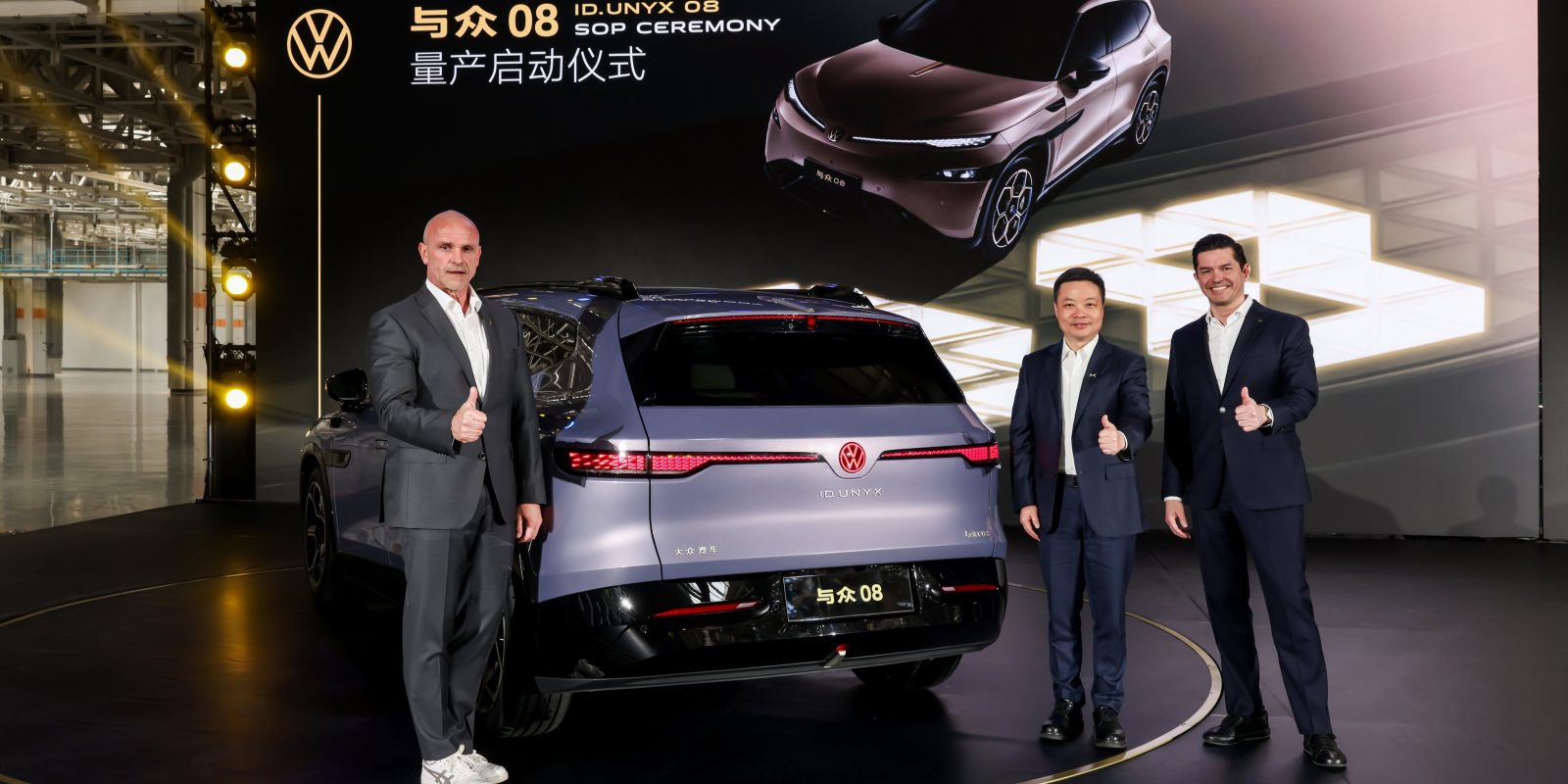
XPeng (XPEV) is in talks with Volkswagen about acquiring a factory in Europe as the Chinese EV maker’s contract production in Austria runs out of capacity. The company’s exports hit a record 6,006 vehicles in April, up 62% year-over-year.
The move comes just one day after BYD revealed it is also pursuing European factory deals with Stellantis and other automakers, signaling a broader wave of Chinese automakers moving to localize production on the continent.
XPeng outgrowing its Austrian production line
Elvis Cheng, XPeng’s managing director of northeastern Europe, revealed the negotiations at the Financial Times’ Future of the Car summit on Wednesday. He confirmed XPeng is discussing with Volkswagen the possibility of finding a production location in Europe, according to a Financial Times report.
XPeng currently builds vehicles for the European market at the Magna Steyr plant in Austria, which has been producing the G6 and G9 models since September 2025 to avoid the EU’s steep tariffs on Chinese-made EVs. The company also completed trial production of its 2026 P7+ electric sedan at the facility in January.
But Cheng said the existing contract production line is running out of capacity — a problem driven by XPeng’s rapidly growing export numbers. The company exported 6,006 vehicles in April alone, a 62% surge year-over-year and a 28% jump from March. In the first four months of 2026, XPeng shipped 17,563 vehicles overseas, up 55% compared to the same period last year.
XPeng would also consider building an entirely new plant in Europe if the right acquisition doesn’t materialize. Notably, Cheng described Volkswagen’s existing factories as “a little bit old,” suggesting not all of VW’s idle capacity meets XPeng’s requirements for its newer EV models.
VW has plenty of excess capacity to sell
The timing aligns with Volkswagen’s massive restructuring. The German automaker shut down its Dresden plant in December 2025 — the first production closure at a German VW facility in the company’s 88-year history — and plans to reduce annual capacity by roughly 750,000 vehicles by 2030. VW CEO Oliver Blume is targeting even deeper cuts, with an additional 500,000 units of capacity reduction across Europe focused on underused factories.
Blume said late last month that VW was considering whether to let its Chinese partners use some of that excess European capacity. The two companies already have a deep relationship: Volkswagen invested $700 million in XPeng in 2023 to acquire a roughly 5% stake, and the partnership has since expanded into joint vehicle development and XPeng’s AI-powered smart driving technology.
The partnership recently deepened further when Volkswagen became the first commercial customer for XPeng’s second-generation VLA 2.0 smart driving solution, marking the first large-scale export of a Chinese EV maker’s core AI technology to a major legacy automaker.
Chinese automakers are racing to localize in Europe
XPeng’s factory talks are part of a broader trend. As we reported yesterday, BYD is pursuing deals with Stellantis and other European automakers to take over underused factories across the continent. BYD is also building its own facilities, with a plant in Hungary expected to begin operations this year and a $1 billion factory in Turkey set to open by year-end.
Meanwhile, Stellantis has deepened its partnership with Leapmotor, planning to transfer ownership of its Madrid plant to Leapmotor’s Spanish subsidiary and add new production lines at its Zaragoza facility. XPeng itself expanded into five new EU markets last September, and its global sales network now exceeds 1,000 outlets across 60 countries.
Top comment by Connor Paull
XPeng is one of the Chinese companies that I'd really want to see come to the US. The tech, I can take or leave, but in terms of design, it and Xiaomi are the 2 that are genuinely interesting right now.
The EU’s tariffs on Chinese EVs — which can reach up to 35.5% — have clearly accelerated this localization push. Producing inside Europe lets Chinese automakers avoid the duties entirely while positioning themselves closer to customers. Despite the tariffs, Chinese EVs have continued to surge in Europe, capturing over 10% of the market in several months during 2025.
Electrek’s Take
This is one of those stories that perfectly encapsulates how dramatically the European auto industry is shifting. Volkswagen — the continent’s largest automaker — is drowning in excess capacity and cutting 35,000 jobs, while XPeng, a Chinese EV maker that barely existed a decade ago, is outgrowing its European production and shopping for factories.
The irony of XPeng potentially buying a VW plant is hard to miss, but it also makes strategic sense for both sides. Volkswagen gets to monetize facilities it can’t fill, and XPeng gets a European manufacturing footprint without the years-long timeline of building from scratch. The existing $700 million investment and technology partnership between the two companies makes this a natural evolution.
What’s most telling is the pace. XPeng went from exporting 398 vehicles in January 2024 to 6,006 in April 2026 — a 15x increase in just over two years. Combined with BYD’s parallel factory push announced yesterday, we’re watching Chinese automakers transition from “exporting cars to Europe” to “becoming European manufacturers.” Legacy automakers struggling to fill their own plants should take note — the competition isn’t just coming, it’s moving in.


FTC: We use income earning auto affiliate links. More.


Comments