
Three major Chinese automakers — BYD, Chery, and Geely — are actively hiring staff, scouting dealership locations, and registering trademarks in Canada following the country’s landmark decision to slash tariffs on Chinese-built EVs from 100% to 6.1%. But none of them have actually started selling cars yet.
The biggest beneficiaries of the new quota system so far are Tesla and, to a lesser extent, Polestar — companies that already have established brands and existing sales infrastructure in Canada.
Chinese automakers are making moves
Canada’s trade deal with China, struck by Prime Minister Mark Carney in January, created a quota system allowing up to 49,000 Chinese-built EVs into the country per year at the standard 6.1% most-favored-nation tariff rate. Interestingly, the strange uneven number was actually based on the number of Chinese EVs, almost entirely Tesla and Polestar vehicles, imported into Canada prior to the 100% tariffs in 2024.
The first 24,500 import permits became available on March 1 on a first-come, first-served basis, with the quota set to grow to 70,000 units annually by 2030.
The deal opened the floodgates for Chinese brands that had been locked out since Canada imposed 100% surtaxes on Chinese EVs in 2024. Three companies are now visibly preparing for market entry.
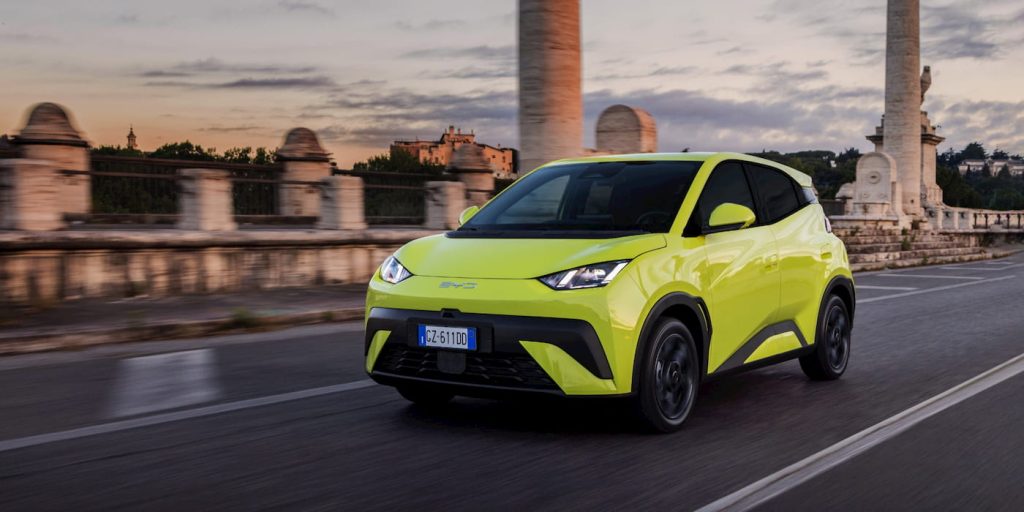
BYD is the most aggressive. The company has hired a Markham, Ontario-based consultancy to find locations for 20 branded dealerships across Canada within its first year. Three locations in the Greater Toronto Area are already under discussion, with plans to expand to Vancouver, Montreal, and Calgary. BYD is expected to bring the Atto 3, Seal, Dolphin, and Seagull to Canada, with industry estimates putting the Seagull as low as ~C$25,000 and the Dolphin around C$31,000. The company has even floated the idea of eventually building a manufacturing facility in Canada or acquiring an existing automaker.
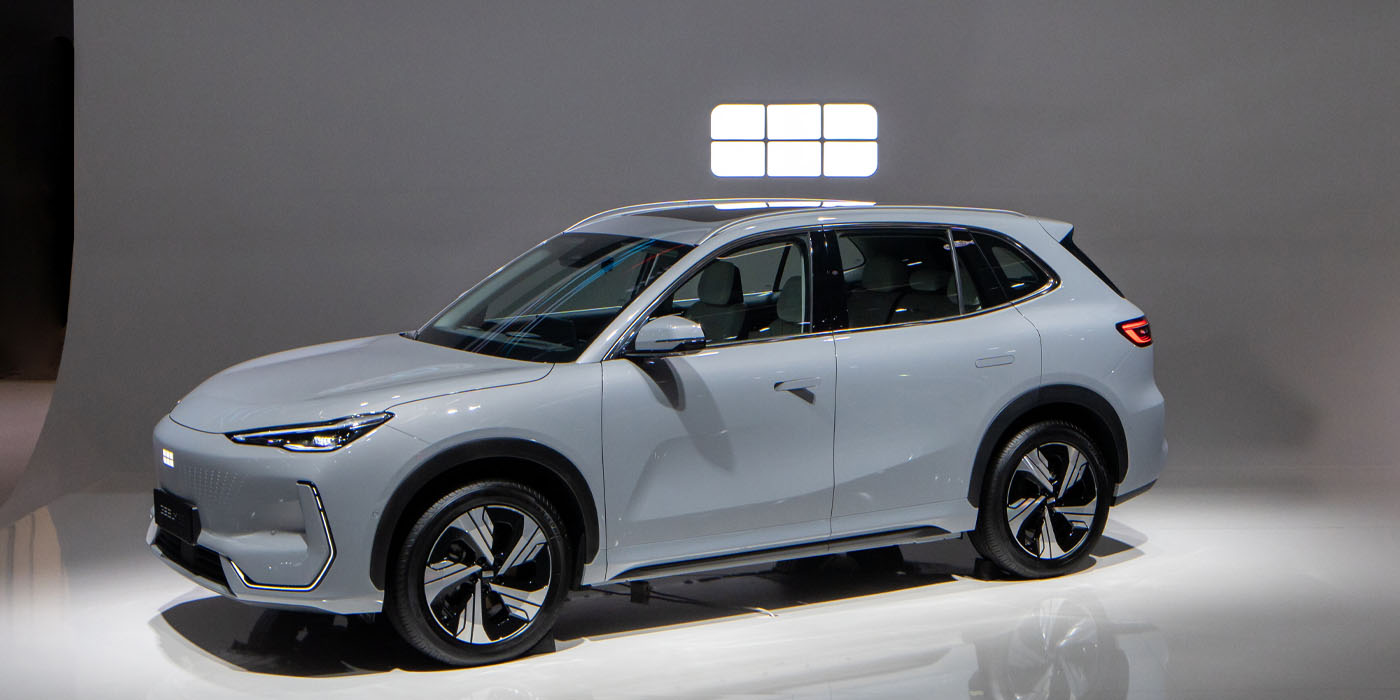
Geely is taking a more measured approach. Its premium Zeekr division posted six senior leadership roles in Toronto in late April — Head of Sales, Marketing, Product, Aftersales, Network Development, and Legal Counsel. Interestingly, the listings reference the “Geely Auto Brand” rather than Zeekr, signaling that the company plans to launch its mainstream Geely nameplate in Canada first. A Geely Group CEO has confirmed Canadian market entry and pointed to eventual local production.
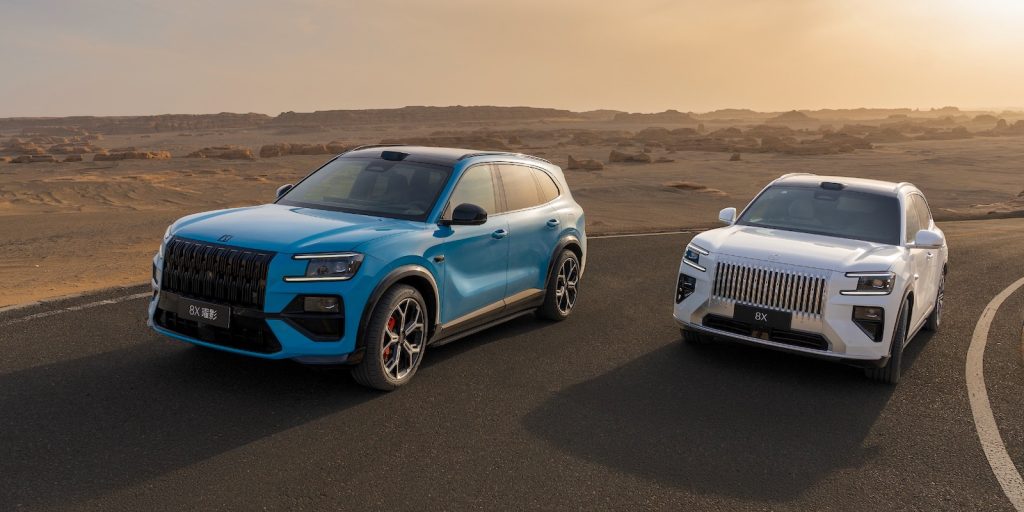
Chery has filed Canadian trademark applications for several sub-brands, including Exeed, iCar, Jaecoo, Lepas, Luxeed, and Omoda. The company began recruiting Canadian staff in January, and two Chery Jaecoo E5 EVs have been spotted in Ontario with manufacturer licence plates.
Geely-controlled Lotus is the only Chinese-built brand that has actually launched under the new quota so far — it introduced the Eletre SUV starting at C$119,900, a dramatic drop from its previous C$313,500 price tag under the 100% tariff. But that’s a low-volume luxury play, not a mass-market entry.
The models that could hit Canada soon
Here’s a look at the Chinese EV models most likely to become available in Canada within the next 12 months:
From BYD: the Seagull (a sub-$30K city hatchback that has been a hit globally), the Atto 3 (compact SUV, ~C$42,000), and the Seal (midsize sedan, ~C$49,000). BYD’s Canadian lineup would undercut most competitors in every segment.
From Chery: the Omoda 5 EV (sporty compact crossover) and Jaecoo E5, both spotted testing in Ontario. Chery sells the Omoda 5 for around C$30,000 in Australia.

From Geely: no specific models confirmed for Canada yet, but the company’s Chinese lineup spans affordable sedans, SUVs, and plug-in hybrids built on the same SEA platform used by Zeekr.
None of these are expected to actually reach Canadian showrooms until late 2026 at the earliest. Dealer networks take time to build, vehicle certification is still in process, and the quota’s first-come, first-served permit system creates its own bottlenecks.
For now, Tesla is the biggest winner
While Chinese brands are still hiring and scouting, Tesla has already made its move. The company launched the Shanghai-built Model 3 Premium RWD in Canada at a starting price of just C$39,490 — roughly US$29,000.
That’s a stunning price. Just two months ago, the cheapest Model 3 available in Canada was the Long Range AWD built at Tesla’s Fremont factory, priced at C$79,990. Tesla had strategically moved its remaining US-built Model 3 inventory back to the United States in anticipation of the quota opening.
The Giga Shanghai Model 3 offers 463 km (288 miles) of range and a 0-100 km/h time of 5.2 seconds. At C$39,490, it undercuts virtually every other EV in Canada, including the Chevy Bolt. The Performance variant also dropped to C$74,990 from C$89,990 — a 17% cut.
Industry estimates suggest Tesla could secure 7,000 to 10,000 of the first 24,500 import permits — roughly 29-41% of the total first-half allocation. That’s a significant chunk of the quota going to a single company that already dominates the Canadian EV market.
The catch: because these vehicles are built in China, they don’t qualify for Canada’s C$5,000 federal iZEV rebate. Even so, the Model 3 at C$39,490 without the rebate is cheaper than most EVs with it.
Polestar is another beneficiary watching the situation closely. The Geely-owned brand had sold thousands of China-built Polestar 2 sedans in Canada between 2020 and late 2024, before the 100% tariff forced the model out of the market entirely. With the tariff now at 6.1%, Polestar has the opportunity to reintroduce the Polestar 2 — though the company told Automotive News Canada it is “still evaluating” the move and hasn’t made firm decisions. A second-generation Polestar 2 is planned for Chinese production in 2027.
Volvo, another Geely subsidiary, is similarly exploring whether to shift Canadian EX30 sourcing back to China. The compact SUV is currently imported from Europe at C$49,950, but a China-sourced version would presumably come in cheaper.
Electrek’s Take
Top comment by Mrvc
Canada still hasn't done the most important thing. That would be good for Canadians as well as the most manufacturers. That is recognize EU safety and emissions standards. Chinese could ship cars much faster. Mexico built geelys could be brought in easier. European car import and export then becomes more of a reality. Plus Canadian companies in other sectors reopen export markets.
The irony of Canada’s Chinese EV quota is hard to miss. The deal was framed as a way to bring affordable Chinese EVs to Canadian consumers — and politically, it was paired with a canola trade concession to give it an economic logic beyond just cars. But three months in, the primary beneficiary is Tesla, an American company shipping cars from its Shanghai factory.
That’s not necessarily a bad outcome. The Model 3 at C$39,490 is genuinely one of the best EV deals in the world right now — a well-equipped sedan with nearly 500 km of range for less than what most Canadians pay for a new gas-powered SUV. If the goal was to accelerate EV adoption, mission accomplished on that front.
But the Chinese brands that the deal was ostensibly designed for — BYD, Chery, Geely — are still months away from selling a single car in Canada. Building dealer networks, getting vehicle certifications, and navigating the permit system takes time. When BYD’s Seagull and Dolphin do eventually arrive at prices potentially below C$30,000, they’ll reshape the Canadian market. That’s when this deal will really start to deliver on its promise of affordable EVs for everyone.
The question is whether the 49,000-unit annual quota is large enough to accommodate all comers — Tesla, Polestar, Volvo, BYD, Chery, Geely, and whoever else shows up. At the rate companies are stacking up, that quota could fill fast, and the real competition won’t be on the showroom floor. It’ll be at Global Affairs Canada, fighting for import permits.


FTC: We use income earning auto affiliate links. More.


Comments