
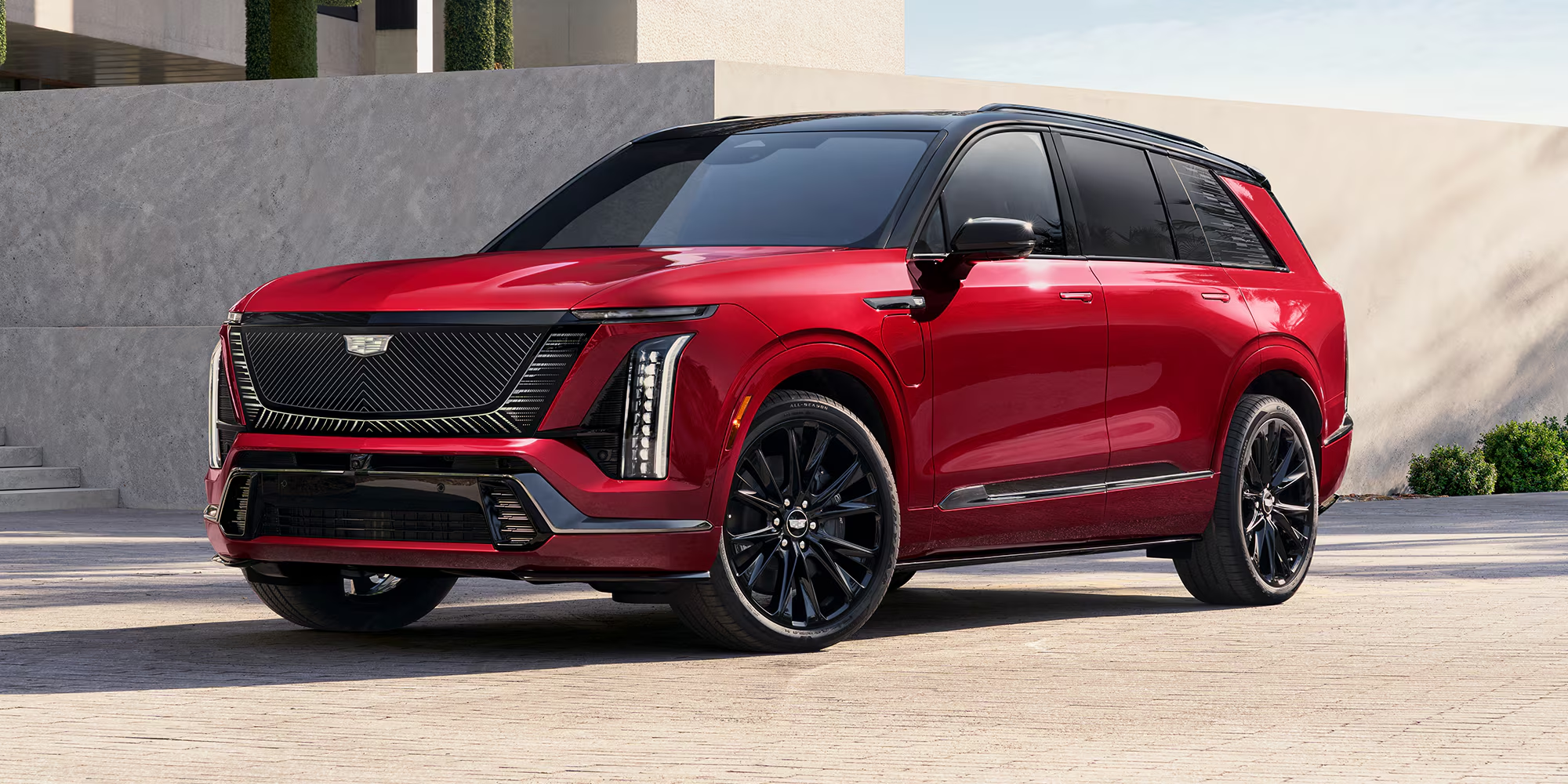
I drove the latest Cadillac Vistiq electric SUV for a week. I added almost a thousand miles on it and put it through Electrek’s new EV review battery of tests. Here are all the results and my thoughts about what turned out to be an enjoyable electric vehicle packed with luxury – but not without limitations.
TL;DR
The Cadillac Vistiq 2026 is a refined luxury three‑row electric SUV that excels in comfort, ergonomics, audio quality, and long‑distance cruising. Its 102 kWh Ultium battery and 615 hp dual‑motor setup deliver strong performance and a relaxed driving experience, while Google‑native infotainment and SuperCruise enhance daily usability and road‑trip comfort. Fast‑charging performance and efficiency are solid but held back by the 400 V architecture, and a few usability frustrations (no frunk, slow app, ADAS subscription) remain. Overall, the Vistiq succeeds as a premium, comfortable family EV rather than a technical benchmark.
Scores by category
- Engineering: 7.7 / 10
- Electric Performance & Charging: 13.9 / 20
- Ergonomics, Cabin & Storage: 15 / 20
- Driving Experience: 12.5 / 15
- Driver Assistance Systems: 7.1 / 10
- Extra: 4 / 5
- Value: 7.8 / 10
- Fitness for Purpose: 4 / 5
- Safety: 4 / 5
Total score: 76 / 100
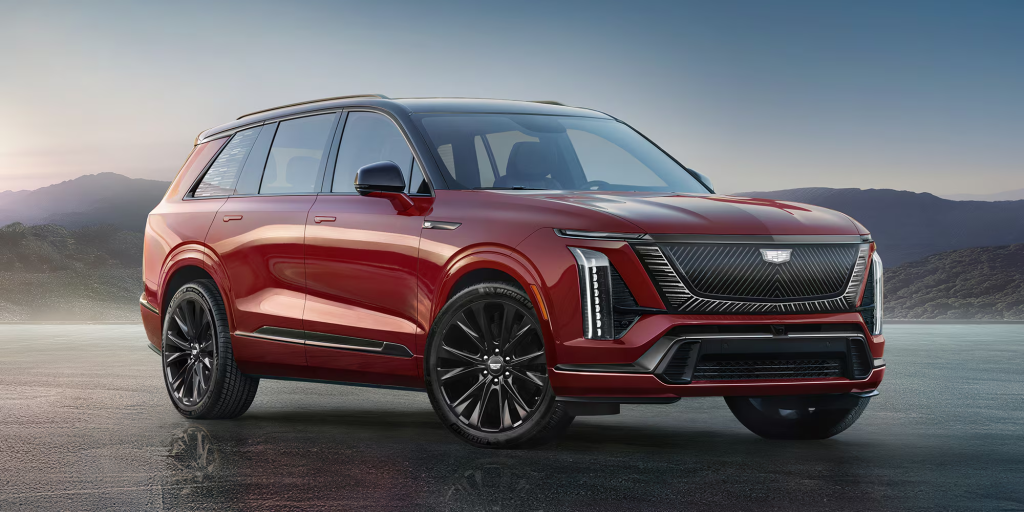
Engineering (7.7 / 10)
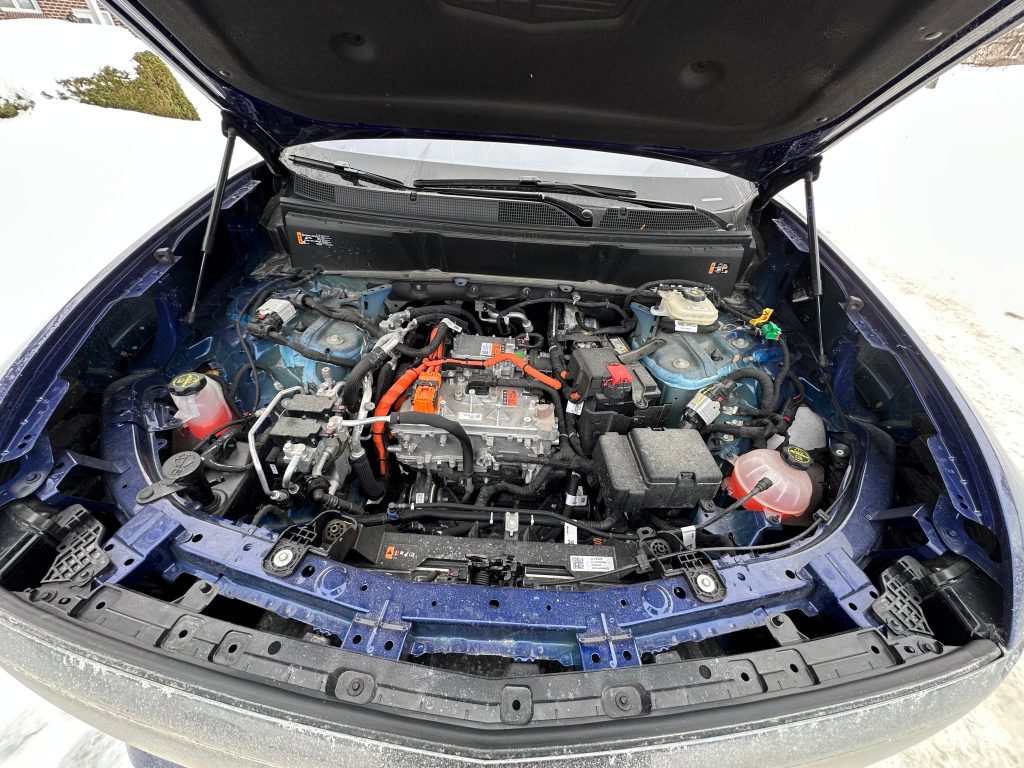
At the heart of the Vistiq is a 400 V, 102 kWh usable lithium‑ion battery. It is an Ultium battery of NMCA chemistry, paired with GM’s Ultium dual‑motor powertrain. NMCA chemistry allows high energy density similar to traditional NMC, while reducing cobalt content through the addition of aluminum, significantly easing ethical sourcing concerns for critical materials.
This is a very good battery, also used in the Cadillac Lyriq. However, I would have liked GM to switch to an 800 V architecture. Charging stations allowing (and rarely exceeding) 500 A of current are uncommon, as most networks prefer increasing voltage rather than current. High current requires complex cable cooling systems to manage heat, which increases with the square of the current (double the current equals four times the heat). As a result, real‑world charging power is limited to about 200 kW (400 V × 500 A), or roughly 2C, which theoretically enables a minimum 30‑minute charging session—more on that later.
The dual‑motor powertrain uses two permanent‑magnet motors for a combined output of 458 kW (615 hp). This is enough to propel the 6,326 lb Vistiq from 0 to 60 mph (96 km/h) in 3.7 seconds and on to a top speed of 210 km/h (130 mph).
Charging is handled by either an 11.5 kW or 19.2 kW onboard charger, depending on trim, allowing up to 46 km (29 mi) or 75 km (46.9 mi) of range per hour of AC charging. The vehicle uses a J1772 inlet for Level 2 charging and CCS for DC fast charging. With the industry’s adoption of the Tesla‑style NACS connector, it is expected that the Vistiq will transition to NACS in the near future, following the Cadillac Optiq 2026.
A welcome addition is Vehicle‑to‑Home (V2H) capability when paired with the GM Energy V2H Bundle. This allows the Vistiq to power a home during a blackout, and with a 102 kWh battery, it can supply multiple days of energy depending on household demand. I would like GM to eventually support third‑party systems, such as the Sigenergy systems demonstrated in early 2025.
I would also have appreciated higher‑power onboard outlets. The current 135 W outlets are insufficient to replace a portable generator when away from home.
Electric Performance & Charging (13.9 / 20)
In daily use, the Vistiq delivers a real‑world driving range of approximately 491 km, which is sufficient for commuting and long trips alike.
Over 1,400 km of driving, I achieved an efficiency of 3.1 km/kWh (1.93 mi/kWh), or 322 Wh/km (518 Wh/mi), in mixed city and highway driving at an average temperature of −2 °C (28 °F). With the 102 kWh battery, this translates to roughly 316 km (196 mi) of range in mild winter conditions—a 35 % reduction, which is a bit high and definitely not lead the pack for most EVs in North America. I would like to see improvement here, as battery and motor technologies, insulation, and HVAC efficiency continue to advance year after year.
Typical EPA‑rated efficiency, achievable from spring to autumn in this region, is around 4.8 km/kWh (2.98 mi/kWh), or 208 Wh/km (334 Wh/mi), which is respectable given the size, shape, and weight of the vehicle.
Fast‑charging performance is competitive rather than class‑leading, with a 5–80 % charge taking roughly 38 minutes on a V3.5 Tesla Supercharger using a NACS‑to‑CCS adapter.
Peak charging power is rated at 190 kW, but reaching this requires chargers capable of delivering more than 500 A, since the battery operates below 400 V at low states of charge—closer to 300 V. Achieving 190 kW at that voltage requires approximately 630 A. As state of charge (and battery voltage) increases, charging power naturally tapers, as expected with today’s lithium‑ion batteries.
At the time of writing, very few CCS charging stations in Canada can exceed 500 A. A native NACS inlet or an 800 V architecture would significantly improve real‑world charging access. Tesla Superchargers can deliver up to 875 A, and higher battery voltage would halve current requirements for the same power.
Charging performance can also be limited by battery temperature. Fortunately, the onboard navigation system automatically preconditions the battery when routing to a fast charger.
During my charging sessions, I observed a peak of 184.3 kW for a short period, resulting in an average charging power of 125.5 kW. Charging did not appear to be limited by the station or the NACS‑to‑CCS adapter, as both the cables and adapter remained cool to the touch. However, immediately after charging, propulsion power was reduced to allow battery cooling, indicating thermal management limitations.
Overall, battery performance is acceptable. With Plug‑and‑Charge via the MyCadillac account, Supercharger access, automatic routing, and battery preconditioning, the charging experience is improving and increasingly effortless.
Ergonomics, Cabin & Storage (15 / 20)
Seats and Comfort
The Vistiq truly shines in ergonomic design and everyday usability. Cadillac has adopted a modern, friction‑free approach: there is no start/stop button, no need to lock or unlock doors manually, and the vehicle automatically shifts into Park when the driver opens the door. Individually minor features, together they create a remarkably relaxed ownership experience.
The cabin is exceptionally comfortable, befitting its luxury positioning. Seats in the first and second rows are excellent, with optional massage for both driver and passenger. The third row is spacious enough for someone my height (6’2”), though unsurprisingly less comfortable than the first two rows. With the second row moved forward, legroom in the third row is decent—it is a true three‑row SUV.

HVAC
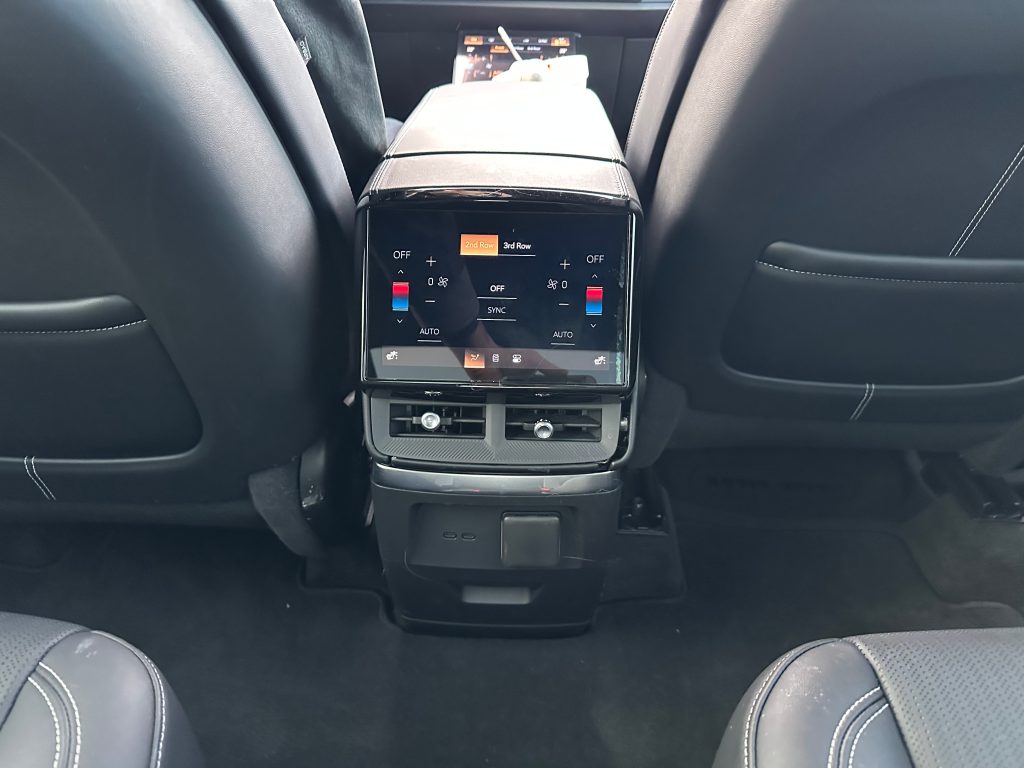
Climate control is divided into five zones: driver, front passenger, second‑row left and right, and third row. Rear occupants can manage second‑ and third‑row HVAC settings via a dedicated screen.
HVAC configuration is excellent, but the absence of automatic seat‑heating logic—where heating gradually reduces as cabin temperature reaches the set point—feels like a missed opportunity at this price.
UI
The infotainment system is impressive but occasionally frustrating. It offers extensive functionality, though deep menu structures can be overwhelming at first. Some settings, such as maximum regenerative braking, are oddly buried in quick menus instead of the Driving Modes section. Driver display customization is also limited.
That said, touchscreen responsiveness is good, and the Android‑based system is intuitive for anyone familiar with Android smartphones. Google Maps is native, along with access to the Google Play Store for automotive‑oriented apps. The system synchronizes with your Google account, making navigation to home or work seamless. Voice commands function much like they do on an Android phone.
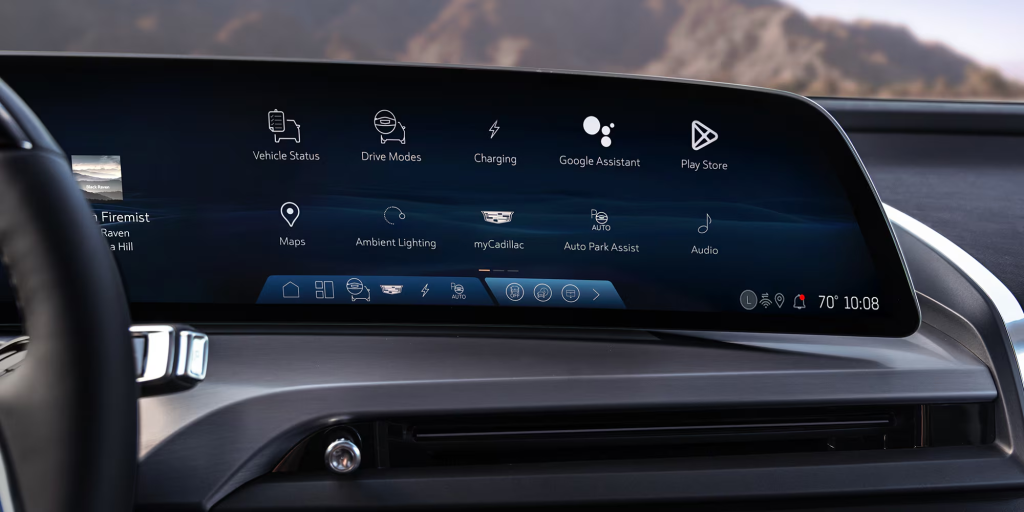
Google Maps integration is excellent. It predicts arrival state of charge, plans routes with charging stops, and triggers battery preconditioning automatically. Predictions are generally accurate, with only minor deviations. One limitation is incomplete recognition of certain Tesla Supercharger compatibilities, though this should be addressed through over‑the‑air updates.
I would also love to see video streaming apps (YouTube, Netflix, Prime Video) enabled on the rear passenger display. Currently, that screen is limited to climate control, while entertainment apps are only available on the front display.
Cadillac offers a companion phone app for vehicle location, cabin preconditioning, locking/unlocking, and charge‑limit settings. Unfortunately, it is painfully slow and sometimes displays incorrect state‑of‑charge information, requiring lengthy refreshes. Despite this, the app remains useful, especially for cabin preconditioning in extreme weather.
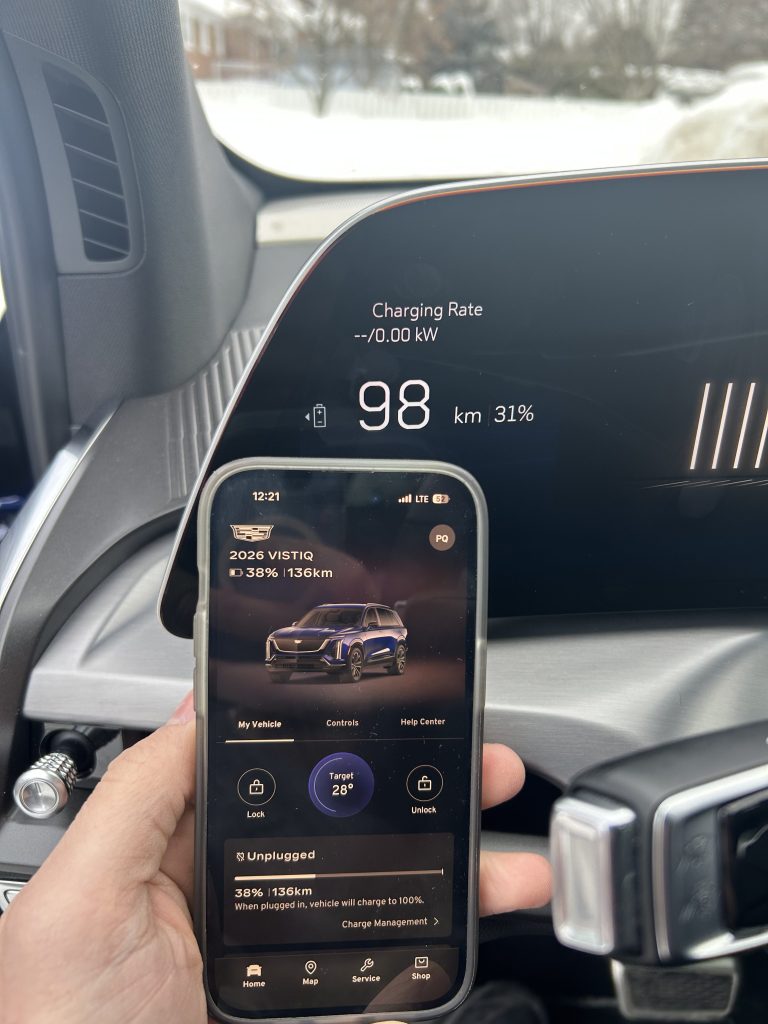
My main complaint regarding the user interface is the steering wheel and driver display alignment. I had to tilt the wheel all the way up to see vital information, which is problematic for drivers (like me) who prefer a low steering‑wheel position.

Storage
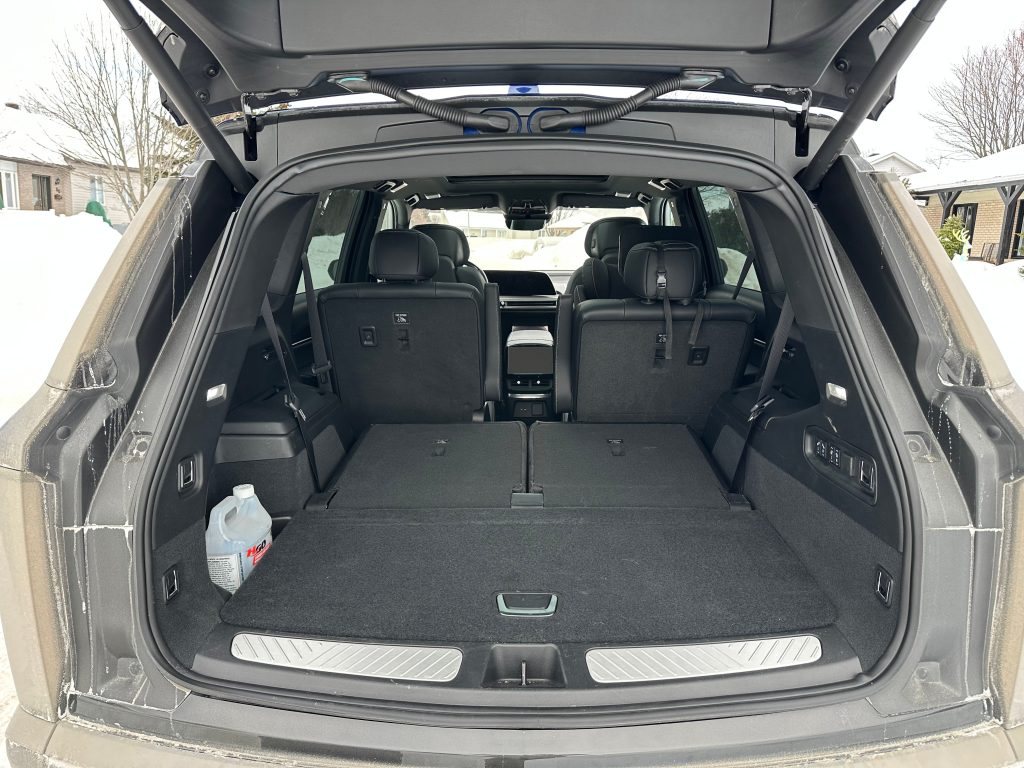
Despite its size—5,222 mm long, 2,026 mm wide, and 1,804 mm tall—storage is limited when the third row is up, and the absence of a front trunk (frunk) is disappointing for a modern EV. With the third row folded, cargo volume is respectable.
Driving Experience (12.5 / 15)
Despite its size, the Vistiq handles impressively well, with confident road manners and a composed ride. Performance is strongest at higher states of charge, with observed output reaching around 480 kW, providing effortless acceleration. Braking is strong, and handling benefits from a low center of gravity.
One‑pedal driving is excellent, with responsive throttle calibration and strong regenerative braking that can exceed many other EVs I’ve driven. I would have liked the option to disable creeping when reversing, as is possible when moving forward.
A left‑side steering‑wheel paddle temporarily boosts regenerative braking by roughly 15 kW. What I initially thought would be a gimmick proved genuinely useful, allowing full deceleration without touching the brake pedal in many situations. Cadillac blends hydraulic braking seamlessly when regeneration is insufficient due to temperature or high state of charge, maintaining a consistent one‑pedal experience. I personally wish this blending could be toggled, but it never bothered me.
Ride comfort is outstanding, reinforcing the Vistiq’s role as a luxury cruiser rather than a performance SUV—despite its 615 hp.
The audio system is a standout feature. Paired with a high‑quality streaming service like Tidal and Dolby Atmos‑enabled tracks, sound quality is extraordinary and among the best I’ve experienced in any vehicle.
Seat comfort, active noise cancellation, Google Maps with accurate SOC prediction, automatic charger routing, and battery preconditioning make the Vistiq exceptionally well suited for road trips. Only charging performance slightly limits its long‑distance potential.
With 5,000 lb towing capacity, six‑ or seven‑passenger seating, and strong traction, the Vistiq is capable and confidence‑inspiring. During a snowstorm, it felt safe, stable, and robust.
Driver Assistance Systems (7.1 / 10)
I used SuperCruise extensively during my week with the Vistiq. It offers both hands‑free and hands‑on modes with driver‑attention monitoring. Hands‑free SuperCruise works on highways and select secondary roads, while hands‑on assist is available elsewhere.
On highways, SuperCruise performed very well, enabling relaxed cruising. It follows lanes, automatically passes slower vehicles (if enabled), and returns to the right lane—though it occasionally lingered in the passing lane without reason. It follows navigation logic by avoiding passes near exits but sometimes fails to take the exit itself, instead asking the driver to intervene.
Limitations remain. The system struggles with unclear lane markings, requires accelerator input to resume after a stop in traffic, and I experienced at least one instance of phantom braking.
I initially thought SuperCruise failed to react to speed‑limit changes, but later discovered a setting that enables automatic speed‑limit following—unfortunately too late to test.
Off‑highway winter driving in Quebec exposed weaknesses. SuperCruise frequently disengaged due to snow‑covered markings, repeatedly handing control back to the driver. In these conditions, I disabled it entirely.
Hands‑on assist offered little benefit on poorly marked roads and frequently nagged me to place my hands on the wheel even when they already were.
This is clearly an advanced driver‑assistance system, not autonomy. It occasionally reacted late to sudden merges or attempted lane changes where none were possible. Still, it significantly reduces highway fatigue when its limitations are understood.
OTA updates should improve performance over time. However, the monthly subscription fee (after a three‑year grace period) for advanced features remains a major downside.
Extra (4 / 5)
Dolby Atmos audio, native Android apps, and in‑car entertainment options (YouTube, Prime Video, games) add real value while waiting or charging. A larger main screen would further enhance the experience.
Value (7.8 / 10)
Luxury trim starts at 79,390$ and the Sport trims start at $79,890. I strongly believe the head‑up display should be standard, as steering‑wheel positioning can obscure the driver display. To get HUD, buyers must step up to the Premium ($93,890) or Platinum ($98,490) trims.
Those trims also include a 19.2 kW onboard charger and active rear steering, which I highly recommend. Based on experience with other vehicles, rear steering dramatically improves maneuverability in tight spaces.
Pricing aligns with expectations for a luxury three‑row SUV, though HUD standardization would improve value perception.
Maintenance requirements are minimal, and Cadillac benefits from the inherent reliability and reduced servicing needs of EVs.
Fitness for Purpose (4 / 5)
The Vistiq is designed as a luxury three‑row SUV, and it fulfils that role well. The third row accommodates tall adults, and comfort, build quality, materials, and powertrain execution are all strong.
Safety (4 / 5)
All trims include the same active safety features, such as Reverse Automatic Braking, Side Cyclist Alert, Rear Pedestrian Alert, and Front Pedestrian and Cyclist Automatic Braking.
At the time of writing, no IIHS rating is available, so this score reflects active safety features only. I would welcome future updates adding rear‑occupant alerts via the app and dashcam functionality using the existing camera suite.
Electrek’s Take
I enjoyed driving the Vistiq for a week. It’s a large SUV—normally not my first choice—but it is comfortable, quiet, handles well, and feels good to drive. The second‑row captain’s chairs (six‑seat configuration) were excellent, and the Android‑based infotainment system is a major improvement over previous Cadillac software.
My main complaints are the steering‑wheel and driver‑display alignment and the $30/month SuperCruise subscription after the three‑year trial. In my opinion, no in‑vehicle feature—aside from data‑dependent streaming—should be locked behind a service‑as‑a‑software paywall.
I was also surprised that blind‑spot camera feeds are not displayed when signaling; the system relies solely on warning lights.
My wife enjoyed riding in the Vistiq and loved the massaging seats. Her only complaint was the lack of space for our dog when the trunk was full. A frunk and larger under‑floor storage would have solved this. On the plus side, installing a baby seat was extremely easy thanks to ideal second‑row seat angles.
Editor’s Note: Bastien is a new contributor to Electrek. I hope our readers can welcome him. He is a long-time EV enthusiast with deep technical knowledge, as he is an engineer who has been operating in the space for a decade now.
As you might have noticed, this is a bit of a different review format for us. Bastien is building a new ‘Electrek EV Review Scoring System’ for our longer-term reviews. We are still evaluating this, and it is likely to change over the next few months. Your constructive feedback is welcome.
We will have a new page on Electrek with rankings based on all these scores once we have populated them with more reviews, starting with this Vistiq review, but many more are coming.
Cheers,
Fred


FTC: We use income earning auto affiliate links. More.


Comments