
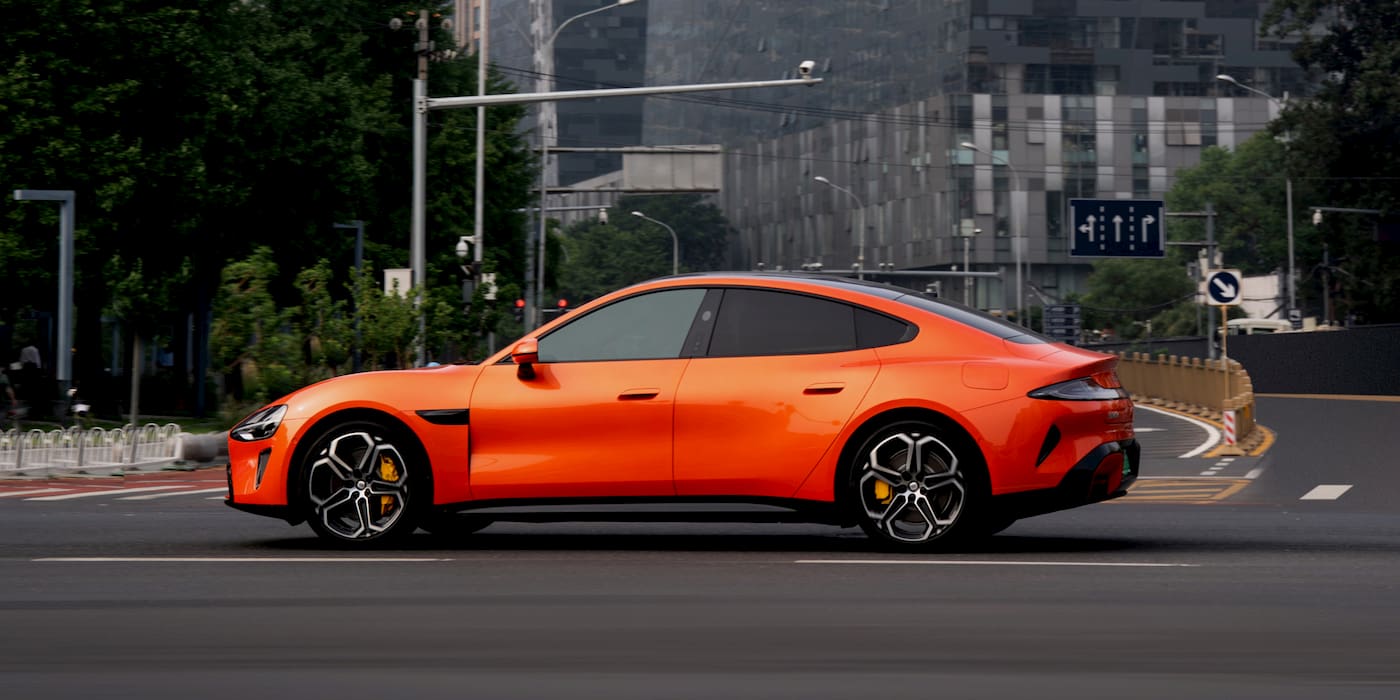
A Xiaomi SU7 owner in China has achieved what might be the most impressive real-world battery longevity test we’ve seen yet: 265,000 kilometers (165,000 miles) in just 18 months of ownership, with battery health still at 94.5%.
The data, first reported by CarNewsChina, comes from owner Mr. Feng, who drives his SU7 Pro an average of 600 km (373 miles) per day — roughly equivalent to a New York-to-Boston round trip, every single day.
“Xiaomi staff told me the results, and I was genuinely shocked,” Feng said. “I had assumed it would be down to 90% at best. To see 94.5% was truly surprising.”
The numbers in context
Feng’s SU7 Pro has a 94.3 kWh battery pack. Based on estimated energy consumption of 18 kWh per 100 km, the battery has gone through approximately 506 complete charge-discharge cycles. In practice, the actual number of partial charging cycles is likely much higher since most EV owners charge between 20-80% rather than doing full cycles.
To put this in perspective:
- Tesla warranties Model 3 and Y RWD batteries for 8 years or 160,000 km (100,000 miles), with a minimum retained capacity of 70%
- Most manufacturers warranty batteries for 8 years or 150,000 km, with acceptable degradation of 20-30%
- This SU7 has already exceeded those distance warranties by 65% while losing only 5.5% capacity
Viral attention — and CEO endorsement
The data was shared by social media user “Jackson’s Sunset Drive” in a video on Bilibili that has racked up millions of views across Chinese social platforms. The post caught the attention of Xiaomi CEO Lei Jun, who shared it on Weibo.
Feng isn’t done pushing limits. He’s aiming to become the first person to put 600,000 km on an SU7 within three years.
“I’ve calculated the operating costs,” Feng noted. “Compared to a conventional vehicle, I’ve saved over 100,000 yuan ($14,300) in fuel costs alone.”
Electrek’s Take
This is the kind of real-world data that matters far more than lab tests and warranty specifications.
Top comment by MobiusPizza
There is still huge misconception on battery life and mileage. I am in battery degradation research for over a decade now and I work for major OEMs. Battery degradation is primarily driven by temperature and time based aging (calendar age) for over 90% of users. Even if you pile mileage and fast charge everyday, unless you area commercial fleet owner and exhaust a whole cycle of battery per day, it is unlikely the battery will lose more than 10% in the first year.
However at year 3 onwards heavy usage may accelerate the aging to say 80% but we are talking about commercial non-stop use here. For most people even heavy users, losing 5% first year, then 2-3 % every year after that is more typical.
There are not that many high-milea Xiaomi cars since the brand is so new.
165,000 miles in 18 months is absolutely brutal usage, most cars won’t see that kind of mileage in their entire lifetime. The fact that a Xiaomi SU7 can handle this while retaining 94.5% battery capacity is remarkable, especially for a company that only entered the EV market in 2024.
Of course, one vehicle’s experience doesn’t represent the entire fleet. Battery degradation can vary based on climate, charging habits, and individual cell variation. But this data point suggests that modern EV batteries, when properly engineered, can far exceed the conservative warranty thresholds manufacturers set.
The timing is notable too, Xiaomi’s first-generation SU7 has ended production, with a refreshed version launching right now. For current owners worried about long-term value, this is exactly the kind of real-world proof that should put minds at ease.


FTC: We use income earning auto affiliate links. More.



Comments