
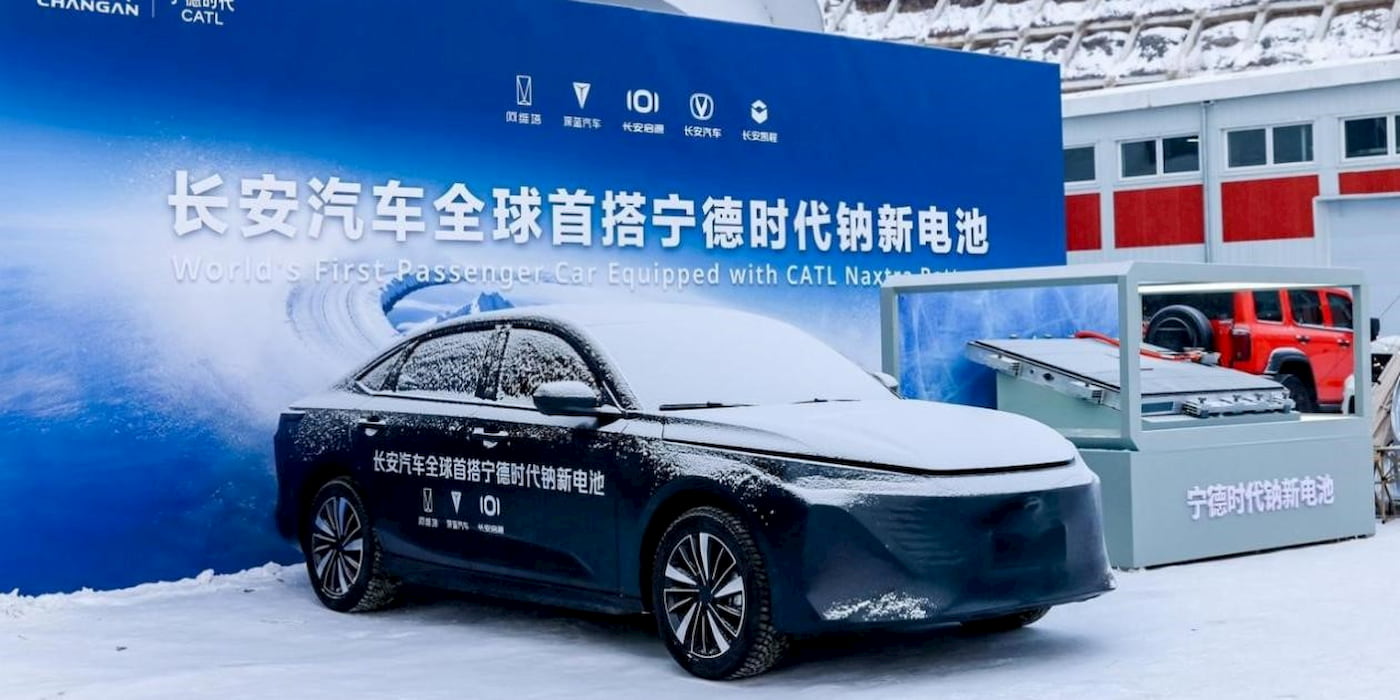
Leading global battery maker CATL and Changan Automobile unveiled the world’s first passenger EV powered by a sodium-ion battery on Thursday.
CATL unveils world’s first sodium-ion battery EV
CATL and Changan unveiled the new vehicle on Thursday, deeming it the world’s first mass-produced EV with sodium-ion batteries.
The vehicle showcased was the Changan Nevo A06 (also known as the Qiyuan A06), but CATL will supply sodium-ion batteries for all Changan brands, including Qiyuan, Deepal, Avatr, and Uni.
“The breakthroughs in sodium-ion technology bring greater resilience, a wider operating temperature range, and more sustainable growth to electrification,” CATL’s chief tech officer, Gao Huan, said during a press conference on Thursday.
After unveiling its “Naxtra” sodium-ion batteries last April, CATL said it achieves an energy density of up to 175 Wh/kg, putting it on par with lithium iron phosphate (LFP) batteries.
Two weeks ago, CATL launched its Tianxing II sodium-ion Naxtra batteries for light commercial vehicles. Passenger EVs will use the same 45-kWh sodium-ion battery pack, which the company says delivers up to 400 km (248 mi) of range.
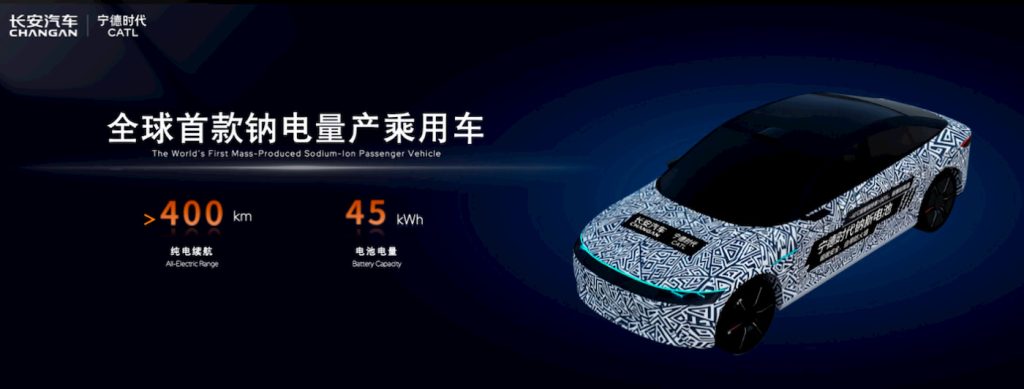
As the new battery tech advances, the Chinese EV battery giant expects range to improve to around 500-600 km (310-372 mi).
While sodium-ion batteries may potentially offer lower costs, they also perform considerably better in extreme cold.
According to CATL, the sodium-ion batteries still charged at temperatures as low as -30°C (-20°F). At -40°C (-40°F), they still retained 90% of their usable capacity. To put that into perspective, lithium batteries retain about 80% of their capacity on average.
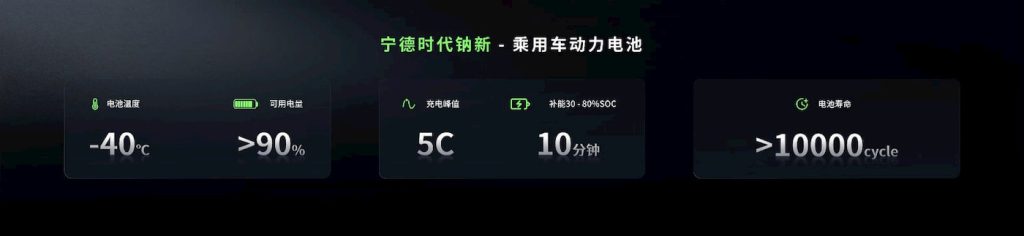
While the Nevo A06, currently sold in China with a 63.18 kWh lithium-ion battery, offers a CLTC range of up to 630 km (397 miles), its performance drops significantly in extreme cold. The 45 kWh sodium-ion battery promises to retain most of its range and charging performance.
They are also safer and less flammable than traditional lithium-ion batteries, CATL said after the batteries went through a series of brutal tests.


With lithium prices rising, sodium offers a lower-cost, less price-sensitive alternative. CATL, BYD, and several other leading Chinese battery manufacturers are investing heavily in sodium-ion batteries to combat rising lithium prices.
Top comment by Arno Hayes
"While sodium-ion batteries, such as LFP"
LFP is not a type of Sodium Ion battery. It's Lithium Ion
Even so. Great news. I'm generally excited for newer battery technologies using more abundant mineral resources to enter the market.
Lithium carbonate prices reached 170,000 yuan ($24,500) per ton earlier this year, up significantly from around 50,000 yuan ($7,200) per ton in 2021.
While sodium-ion batteries currently offer lower energy densities than LFP, CATL aims to bring them on par within the next three years.
In 2025, sodium-ion battery shipments reached 9 GWh, up 150% from 2024. Over the next four years, that number is expected to reach over 1,000 GWh.
CATL expects 2026 to be a turning point for the new battery tech with plans to launch its first sodium-ion battery EV by mid-year. After that, it will continue rolling it out to new vehicles while deploying them in new markets.


FTC: We use income earning auto affiliate links. More.


Comments