
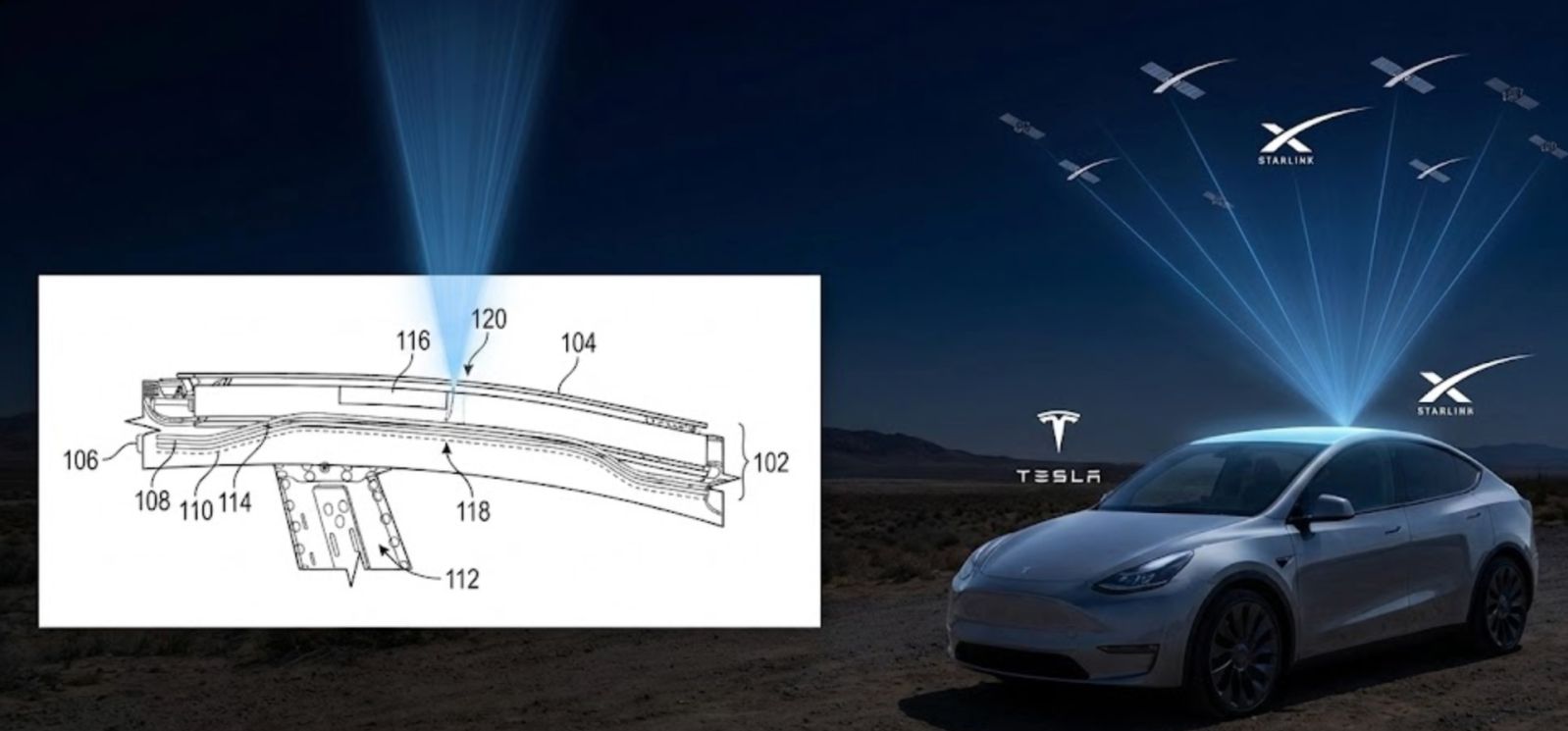
Tesla has filed a new patent that strongly suggests the automaker is preparing to integrate Starlink satellite receivers directly into its vehicles.
The reason why is still unclear.
Tesla vehicles are already some of the most connected machines on the planet, relying heavily on cellular networks for everything from Autopilot data collection to over-the-air software updates and streaming features.
But cellular coverage has limits.
Now, a new patent filing reveals Tesla’s solution.
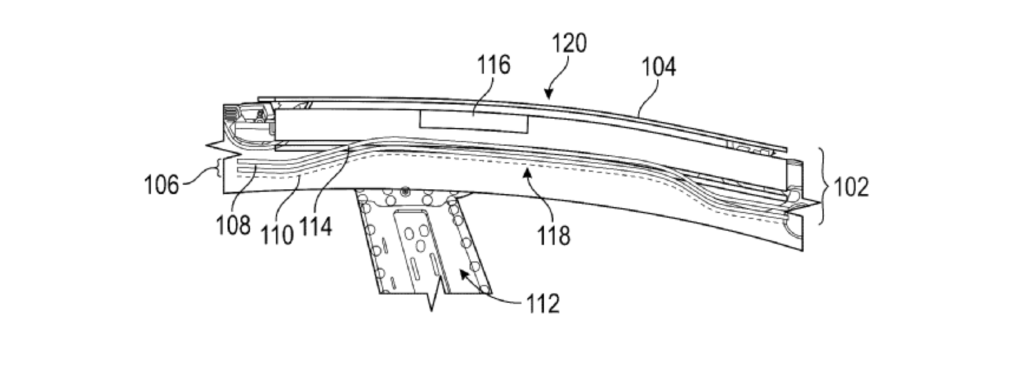
The patent, titled “Vehicle Roof Assembly with Radio Frequency Transparent Material,” describes a new roof structure designed specifically to allow satellite signals to pass through.
The filing notes that traditional automotive glass and metal roofs often block or attenuate satellite signals, making it difficult to hide an antenna inside the cabin. Tesla’s solution is to use specific polymer blends, such as polycarbonate or acrylonitrile styrene acrylate, that are “radio frequency (RF) transparent.”
The patent explicitly mentions that this assembly allows for the integration of “antennae directly into the roof structure, facilitating clear communication with external devices and satellites.”
Here is a drawing from the patent showing the multi-layer roof structure designed to hide the antenna while maintaining structural integrity:
While the patent doesn’t name “Starlink” directly (patents rarely name specific commercial products), the implications are obvious. Starlink, SpaceX’s satellite internet constellation, is a high-bandwidth, low-latency satellite network capable of supporting the kind of data Tesla vehicles consume.
We have already seen some Tesla owners retrofit Starlink Mini dishes onto their cars for off-grid camping, but this patent suggests a factory-integrated solution where the antenna is completely invisible, hidden inside the roof lining.
This would allow a Tesla to seamlessly switch between 5G cellular networks and the Starlink satellite network, depending on coverage, ensuring the car is always online.
Electrek’s Take
Top comment by Brian
I think it'll be about cost. Right now if you have premium connectivity, Tesla pays whatever cellular network for that. If they can bring it totally in "house" then that means elmo pays himself for internet and not AT&T or some other carrier. It might not be much cost savings but every penny counts for those reoccurring fees on the bottom line.
Cars don’t necessarily need satellite connections.
For a while, some thought it could be needed for autonomous driving by enabling constant connectivity, but it is generally accepted that you can’t rely on any kind of internet or in-car communication for self-driving. The risk is too high.
For the most part, a cellular connection is perfectly fine for a car.
However, I wouldn’t mind this if it’s offered as an option for people who are looking to stay connected in more remote areas. It could make sense for that.


FTC: We use income earning auto affiliate links. More.


Comments