
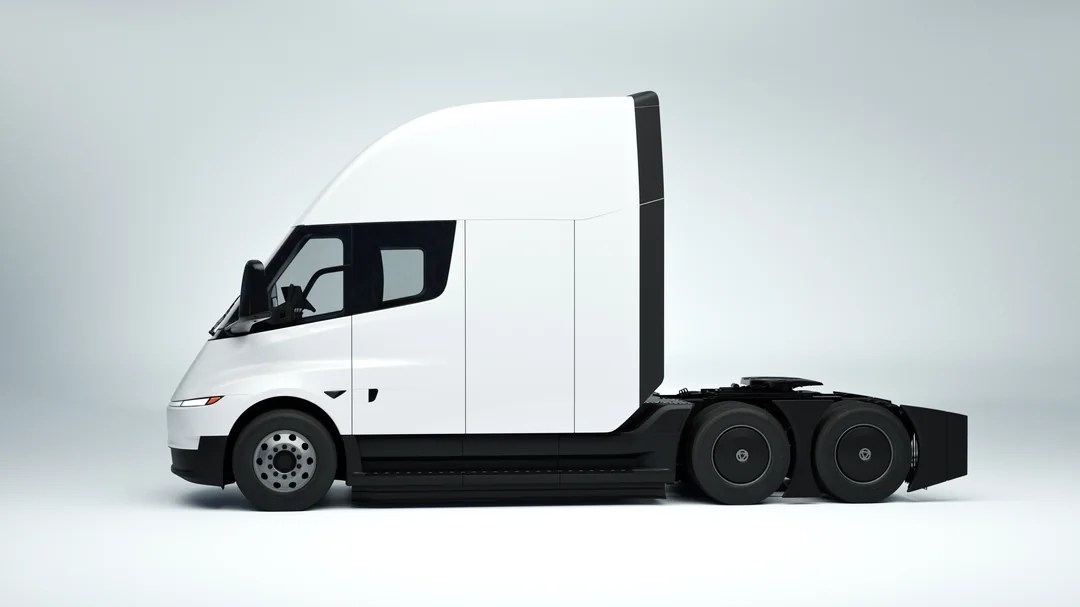
Tesla confirmed that its Semi electric truck is coming to Europe, and that it will reveal the specs and launch details next month at IAA Transportation, the continent’s largest commercial vehicle show.
The Tesla Semi account posted that “specs & launch details for Semi in Europe” will be “unveiled at IAA Transportation in Hannover, Germany,” which runs September 15-20. A Semi will be on display at the show.
What Tesla actually announced
The announcement is short on detail by design. Tesla isn’t giving European range figures, pricing, or an on-sale date yet. It’s committing to bring the truck to Hannover and put numbers on the board there.
Tesla has been publicly gearing up to sell the Semi in Europe since last year, and at IAA 2024 it brought a truck but said almost nothing about an actual market plan. This time it’s framing Hannover as the launch venue, which is the clearest signal yet that Europe is happening rather than being perpetually “coming.”
What Europe will get, at least mechanically, is the truck Tesla is already building in Nevada. Tesla revealed final specs in February for two trims: a Standard Range rated at 325 miles (523 km) and a Long Range at 500 miles (800 km). Both run an 800-kW tri-motor drivetrain rated at 1,072 hp and charge at up to 1.2-MW Megacharger speeds.
Tesla is quoting $290,000 for the Long Range Semi and roughly $260,000 for the Standard Range in the US — the lowest-priced Class 8 battery-electric tractor on that market. What those trucks cost in euros, and where they’ll be built for Europe, are open questions the reveal will need to answer.
Production is finally real
A European launch gives some credibility to Tesla finally achieving volume production of the long-delayed truck.
Tesla rolled the first Semi off its high-volume production line at Gigafactory Nevada in April. That dedicated 1.7-million-square-foot plant is designed for 50,000 trucks a year, and it’s what turned the Semi from a nine-year “coming soon” into something fleets can order.
Demand has followed the production. This week, Swedish freight-tech company Einride placed the largest Semi order yet at 500 trucks — though notably for its North American fleet, not Europe. PepsiCo now runs close to 100 Semis in California.
Tesla is late to a market Europe already electrified
Top comment by XXX XXX
The Tesla Semi has no chance in Europe. Unlike in the US, electric trucks are already a visible part of European freight traffic. European trucks are built around strict limits on width, length and height, which is why the cabs are much shorter. The Semi would need substantial changes, especially because the central driving position is poorly suited to many tasks drivers routinely perform from the driver’s window. More importantly, European electric trucks are extremely efficient. Real-world freight consumption is already below Tesla’s quoted Semi figures. The Mercedes eActros 600, for example, uses LFP cells, has a multi-speed gearbox and decades of commercial-truck engineering behind it. And then there is service. European truck manufacturers have extensive service networks because trucks simply have to keep running. Tesla’s service situation is already a red flag in Europe even with passenger cars. The Semi isn’t entering an empty market. It is entering a market where European manufacturers are already well ahead.
Mercedes-Benz’s eActros 600, a long-haul electric truck with about 500 km of range and a 600-kWh battery, is already on the road in 15 European countries. Volvo Trucks, the region’s electric heavy-truck sales leader, unveiled a new generation of electric HGVs in April. MAN, Scania, Renault Trucks, and DAF all have battery-electric Class 8 tractors in production or delivery.
These aren’t concepts. European fleets have been buying and running electric long-haul trucks from domestic brands with established service networks, homologation, and dealer support — the exact infrastructure Tesla still has to build out on the continent.
But in the US at least, Tesla appears to have cost and range advantages. At the unveiling at IAA next month, we should see if these advantages carry over to Europe.
If you’re weighing the cost of powering an electric fleet — or just your home — locking in low energy costs with solar has never made more sense. With electricity rates climbing nearly 10% last year, home solar protects you against future rate increases. And with lease and PPA options, you can go solar with zero upfront cost and start saving immediately. If you want to find the best deal, check out EnergySage. It’s a free service with hundreds of pre-vetted installers competing for your business, so you save 20 to 30% compared to going it alone. No sales calls until you pick an installer. Get your free quotes here.


FTC: We use income earning auto affiliate links. More.



Comments