
Tesla launched its “Robotaxi” service in Dallas and Houston yesterday — expanding to two new cities for the first time since Austin. There’s just one problem: there are virtually no cars available.
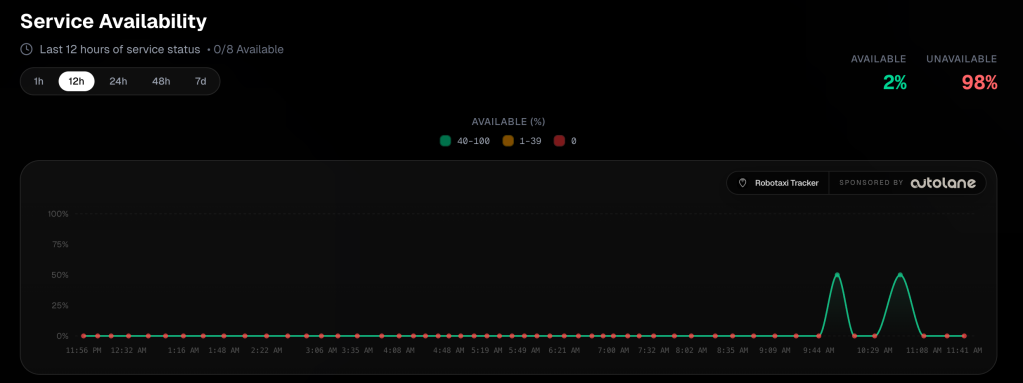
Data from Robotaxi Tracker shows that Tesla’s new Houston and Dallas deployments have had 0% to 2% availability over the past 24 hours, with only brief spikes to around 50% during a narrow morning window before dropping back to zero. It looks like Tesla deployed a car or two in each city and called it a launch.
The pre-earnings pattern
If this sounds familiar, it should. In January, Tesla announced it had launched “unsupervised” Robotaxi rides in Austin — just days before its Q4 2025 earnings call. The stock jumped 4% on the news. But as we reported at the time, Tesla’s ‘unsupervised’ Robotaxis vanished a week after that pre-earnings announcement.
Now Tesla is running the same playbook. Q1 2026 earnings are on Wednesday, April 22 — three days from now — and the company suddenly has a “Robotaxi is now rolling out in Dallas & Houston” headline to wave in front of investors on the earnings call.
The geofenced areas are small. Houston’s zone covers the Jersey Village and Willowbrook areas in the northwest part of the city — roughly 12 to 15 square miles. Dallas gets a slightly larger zone of about 30 to 35 square miles. For context, the Houston metro area spans over 10,000 square miles.
Robotaxi Tracker tracks Tesla’s Robotaxi availability across all markets by pinning the app in specific areas, and it shows extremely little availability since the launch over the weekend.
Here’s in Dallas:
And here’s in Houston:
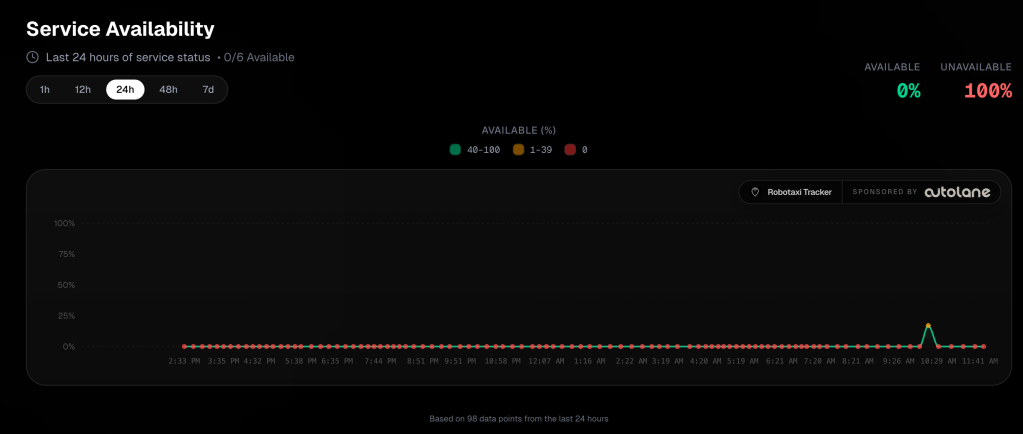
As of writing this (Sunday afternoon), 24 hours after the service launched, there’s no service availability in either of the new expansions, and only a single vehicle has been reported by riders in each market.
Still not ready in Austin
The real tell is what Tesla is not doing. If the company was genuinely confident in its unsupervised driving technology, the logical move would be to scale up operations in Austin — where it has been operating for 10 months — by deploying more cars across the expanded 245-square-mile geofence. Instead, Austin still has only about a dozen unsupervised vehicles and still relies heavily on safety monitors in most rides.
Tesla has reported 15 crashes to NHTSA since launching in Austin — a crash rate roughly 4x worse than human drivers. Unlike every other autonomous vehicle company in the NHTSA database, Waymo, Zoox, Aurora, Nuro, and Tesla redact the detailed narratives explaining what happened in each crash.
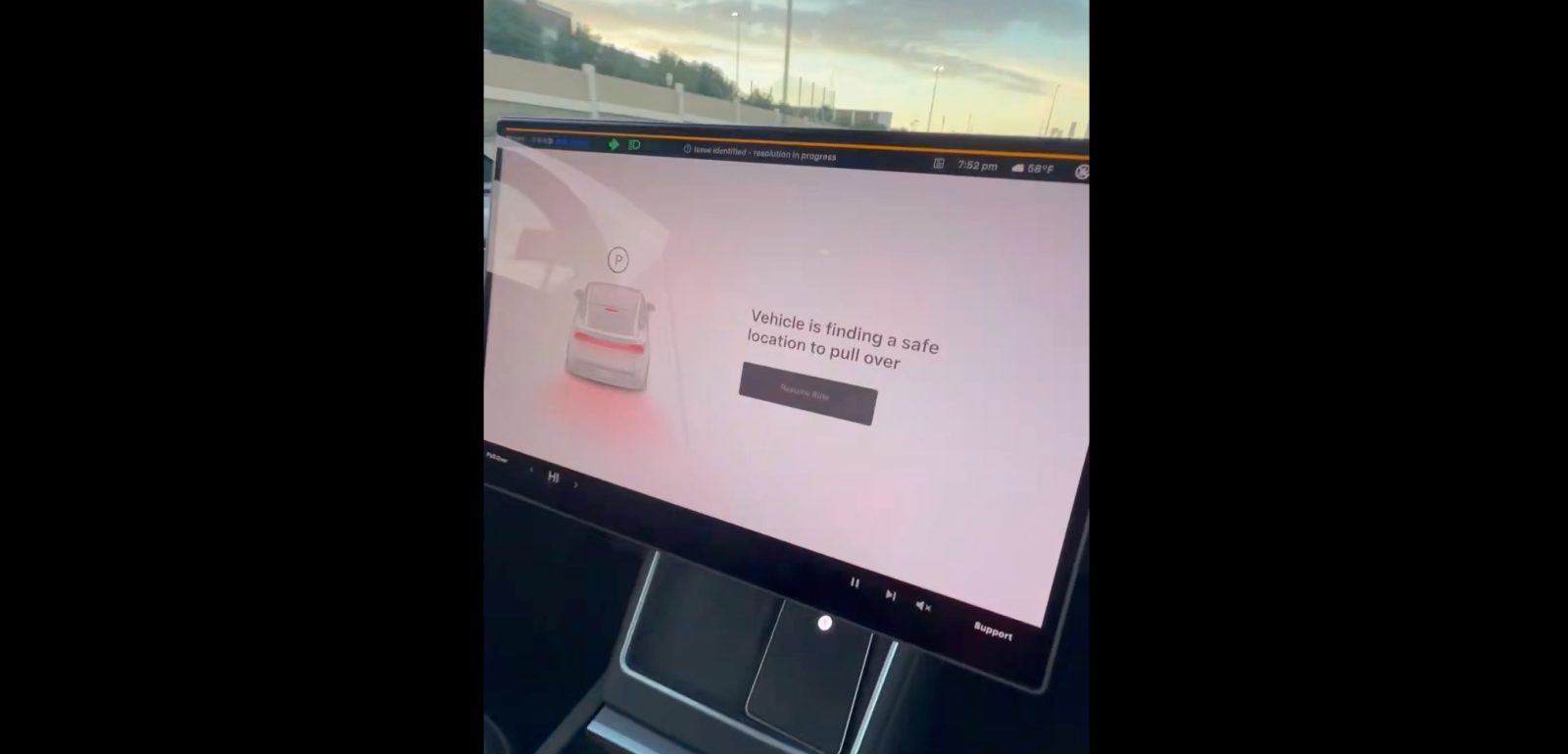
And the early results in the new cities are already showing problems. Videos shared on social media show Tesla’s Robotaxi vehicles running into issues in the new markets, including additional incidents on the first day of operations.
In the example above, Tesla Robotaxi, which doesn’t drive unsupervised on freeways, wrongly navigated to one and then looked for a place to pull over.
Earnings expected to be rough
Tesla’s Q1 2026 earnings report lands Wednesday, and expectations are not great. Q1 deliveries came in at 358,023 vehicles — missing analyst consensus and down from Q4 2025’s 418,227 units. Analyst EPS estimates range widely from $0.24 to $0.40, reflecting significant uncertainty about Tesla’s near-term profitability amid ongoing margin pressure and growing competition.
Tesla stock is trading around $400 — roughly flat year-to-date — after rallying from a $361 low in early April. The company trades at approximately 178x forward earnings, compared to 8-12x for the auto industry. That valuation rests almost entirely on the promise of robotaxi and AI, promises that keep generating headlines but not actual scaled operations.
Electrek’s Take
We have now seen this pattern three times: Tesla makes a splashy autonomous driving announcement days before an earnings call, generates positive headlines, and the actual operational reality turns out to be a fraction of what was implied.
Top comment by Beario
The pre-earnings show is in full swing. Should be interesting to see on the 22nd what the greatest showman reveals. Realistically, Tesla has a deteriorating core business selling cars so selling people on robotaxis, robots, and AI is their way to pivot away from what's failing to try to get new life. Tesla investors certainly believe it but time will tell as Tesla is going to have to show some real progress at some point. A few robotaxis out on the street is not going to cut it. New lower priced model cars would have been a better idea to keep up with the competition, but its obvious the showman wants to make a lot of money fast so selling future dreams is the best route to fast profits.
In June 2025, it was the “driverless delivery” stunt — one 15-mile autonomous delivery that was never repeated. In January 2026, it was “unsupervised” rides that vanished within a week. Now it is a “launch” in two new cities with essentially one car each and virtually zero availability.
The strategy is transparent at this point. Tesla is not expanding a robotaxi service, it is expanding the narrative of a robotaxi service, timed precisely for maximum impact on investor sentiment ahead of what are expected to be disappointing earnings.
If Tesla had genuine confidence in its unsupervised driving capability, the company would be flooding Austin with hundreds of unsupervised vehicles, proving out the safety record, and building real capacity before expanding. Instead, it is doing the opposite: spreading a handful of cars across a growing number of tiny geofences to create the appearance of rapid expansion while safety remains the core limiting factor.
The question investors should be asking on Wednesday’s earnings call is not “how many cities are you in?” — it is “how many truly unsupervised rides did you complete last quarter?”


FTC: We use income earning auto affiliate links. More.


Comments